


For years, B2B software companies have operated on a dangerous assumption: that meetings, CRM updates, and customer surveys tell them how their accounts are actually doing. The consequences of that assumption are now visible across the industry — net revenue retention is declining, churn is stubborn, and the average enterprise is sitting on trillions of telemetry events that contain the real signal, untouched. The product itself knows which customers are at risk and which are ready to expand, but without the machine learning infrastructure to decode that data at scale, revenue teams are left forecasting blind. QuadSci was built to close that gap, applying statistically grounded, explainable machine learning to raw product telemetry to predict churn and expansion up to 12–18 months before renewal with 94% accuracy. Through its two core products, Cohorts AI and Growth AI, the platform maps the complete customer journey by usage rather than relationship, surfacing hidden risk and opportunity across the entire customer base and translating those findings into prescriptive playbooks that go-to-market and product teams can act on immediately. The company has grown 5x year-over-year and was named Machine Learning Company of the Year in the 2025 AI Breakthrough Awards, establishing itself as core infrastructure for enterprise SaaS teams looking to move from reactive guesswork to evidence-based growth.
AlleyWatch sat down with QuadSci co-founders and co-CEOs Dan Harmeson and Sean Murray to learn more about the business, its future plans, recent funding round, and much, much more…
Who were your investors and how much did you raise? Was it seed, Series A, B, etc?
We raised an $8M Series A led by Crosslink Capital, with participation from Alumni Ventures, Correlation Ventures, and angel investors Shail Jain, Peter Gibson, Tom Roloff, and Rob Eberle.
Tell us about the product or service that QuadSci offers.
QuadSci delivers predictive and prescriptive AI for customer intelligence. We analyze trillions of product telemetry events to help software companies predict churn and expansion 12–18 months before renewal with 94% accuracy.
Our platform includes Cohorts AI and Growth AI, two complementary systems designed to turn product behavior into action.
Cohorts AI identifies statistically significant customer segments based on real usage patterns, revealing hidden risk and expansion opportunities across the customer base.
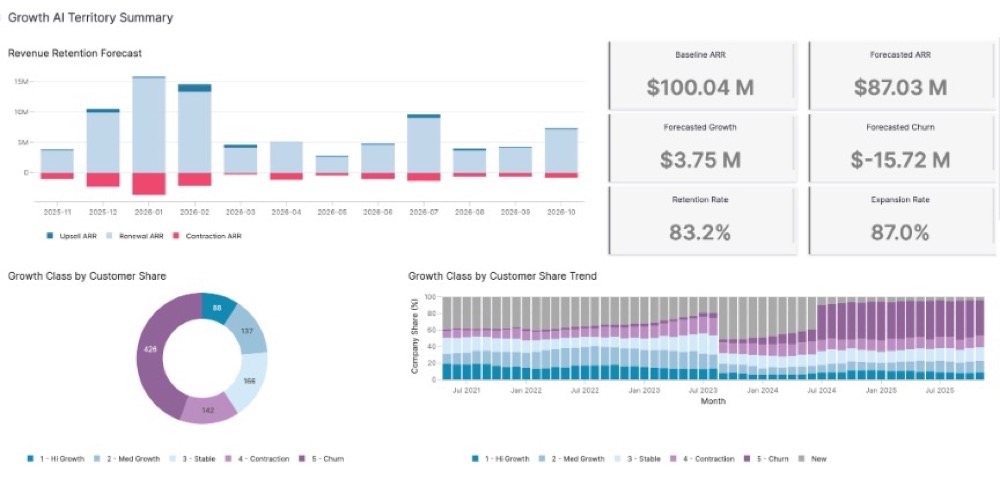
Growth AI translates those insights into prescriptive recommendations through Q-Chat, enabling revenue and product teams to orchestrate retention and expansion strategies grounded in evidence rather than intuition.
What inspired the start of QuadSci?
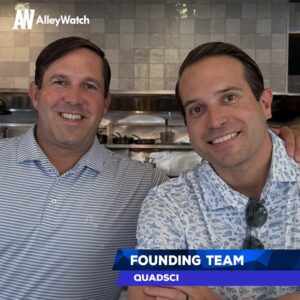 After scaling enterprise SaaS businesses at Elastic and MuleSoft, we saw a structural issue across software. Companies were trying to understand customer behavior and forecast revenue through meetings, CRM updates, and retrospective interpretation.
Meanwhile, the product itself contained the real signal.
We founded QuadSci to bring statistical rigor and machine learning discipline to customer intelligence, using telemetry as the source of truth rather than human interpretation.
How is QuadSci different?
Most systems today rely on rules engines or surface-level signals. They flag accounts based on manually defined thresholds and retrospective inputs.
QuadSci applies statistically grounded, explainable machine learning directly to product telemetry at scale. We do not rely on biased flags or shallow indicators.
That allows us to predict churn and expansion earlier further out and with greater confidence. Just as important, we can explain why a prediction was made and point to real, unbiased data. Precision, recall, and interpretability matter when you are making revenue decisions.
What market does QuadSci target and how big is it?
We serve B2B software companies that operate subscription models and rely on retention and expansion for growth.
Customer intelligence sits at the intersection of product analytics, customer success, and revenue operations. As retention pressure increases across SaaS, this is becoming core infrastructure.
The broader market includes thousands of mid-market and enterprise SaaS companies globally, representing a multi-billion-dollar opportunity as AI becomes foundational to how companies operate.
What’s your business model?
We operate a revenue-tiered subscription model, priced based on size of customer ARR. Our AI integrates into the existing GTM product stack and is deployed inside our clients data environment to ensure compliance with data and security protocols. The output becomes part of how revenue and customer strategy are managed on an ongoing basis.
How are you preparing for a potential economic slowdown?
The environment already reflects a slowdown in growth expectations and software has been feeling it for years. Retention and efficiency are the mandate and QuadSci is uniquely positioned to help partners navigate a slowdown. As a result of this complex environment that B2B Software is navigating in the age of AI, QuadSci’s business is accelerating.
Our platform helps companies identify churn and expansion risk up to 12–18 months in advance, allowing leaders to act earlier and allocate resources more intelligently. In uncertain markets, predictability becomes a competitive advantage.
What was the funding process like?
We focused on partners who understood the structural shift happening in SaaS from growth-at-all-costs to evidence-based execution all occurring in the age of AI. Investors are attempting to categorize prospective AI companies as systems of record or systems of Action – QuadSci is a hybrid that creates new data then uses that to empower our Agents based on signals we create. That nuance was hyper important for us to see that our investors understood.
Investors responded to the clarity of our thesis, the technical rigor of our approach, and the measurable impact we’ve demonstrated with customers.
What are the biggest challenges that you faced while raising capital?
AI is crowded, noisy, frothy with a lot of hype and not a lot of durable quality. Many companies position themselves as predictive or intelligent without being able to explain how their systems work. We told our investors the same thing we tell CEOs, if you are making an investment in an AI technology, does it actually create data or just repackage your enterprise data in a synthesized summary with a cool experience?
What factors about your business led your investors to write the check?
Strong growth, clear technical differentiation, and measurable outcomes.
We’ve grown 5x year-over-year, demonstrated predictive accuracy at meaningful time horizons, and built technology that is both performant and interpretable. That combination builds trust.
What are the milestones you plan to achieve in the next six months?
We are focused on three priorities:
- Enhancing our role-specific Agents embedded in Cohorts AI and Growth AI
- Deepening our quantitative machine learning models.
- Continuing GTM expansion, customer transformation and ecosystem partnerships.
Our goal is to further solidify QuadSci as core customer intelligence infrastructure.
What advice can you offer companies in New York that do not have a fresh injection of capital in the bank?
Growth is harder today, and capital is more selective. Companies that can measure what truly drives customer value and act on it early will outperform.
Disciplined execution and evidence-based decision-making are more powerful than optimism. Investors are wary of imbalanced growth, they want to make sure you have a solid understanding of your unit economics earlier than a few years ago because of how fast AI capabilities and associated expenses move.
Your customers will be the most important data point for new investors.
Where do you see the company going now over the near term?
We see customer intelligence becoming foundational to how software companies operate.
Near term, we will continue scaling enterprise adoption and investing in product innovation. Longer term, we believe predictive and prescriptive AI will redefine how companies manage customer relationships and revenue performance.
What’s your favorite winter destination in and around the city?
- Dan: I lived in Stuytown. I always love the charm of the Alphabet City, East Village and West Village. Anytime I can get a burger at Minetta Tavern I’m happy.
- Sean: Nothing beats a winter stroll through Central Park with snow on the ground or falling from the sky. Pair that up with a great meal and it’s a perfect day for me.