


Every day, financial institutions process billions of card, ACH, and wire transactions across rails that have barely changed since the 1970s and the data that passes through those rails is notoriously difficult to use. Raw transaction strings shed merchant context as they move through multiple intermediary systems, leaving banks and fintechs with cryptic identifiers that drive high dispute volumes, weaken rewards attribution, and block the AI-powered workflows their businesses urgently need to build. Spade takes a fundamentally different approach: rather than training models on noisy transaction data, the method every incumbent has relied on, the company built a proprietary database of verified merchant records and treats enrichment as a search problem, matching each transaction to a real business in real time. The platform delivers 99.9% coverage of US and Canadian merchants with greater than 99% accuracy at P99 latency under 40 milliseconds, performance that unlocks mission-critical use cases like authorization decisioning, fraud prevention, and real-time rewards attribution that traditional enrichment vendors have never been able to support reliably. As banks and fintechs race to deploy AI agents and automate complex financial workflows, the quality of underlying transaction data has become a board-level concern and the structured, verified intelligence Spade delivers sits at the center of that shift.
AlleyWatch sat down with Spade Cofounder and CEO Oban MacTavish to learn more about the business, its future plans, its recent funding round that brings the company’s total funding raised to $56.1M, and much, much more…
Who were your investors and how much did you raise?
We recently announced our $40M Series B funding round. This marks a significant milestone in our mission to be the data and AI platform for financial services turning messy transaction data into structured intelligence that banks, fintechs, and institutions can build on.
The round was led by Oak HC/FT, with participation by Andreessen Horowitz, Flourish, Gradient, NAventures, National Bank of Canada’s corporate venture arm, and Y Combinator.
Tell us about the product or service that Spade offers.
Spade is a data and AI platform that turns messy transaction strings into structured, verified records — and gives teams the tools to act on them. Banks, fintechs, and financial institutions come to Spade when they’re ready to treat their transaction data as an asset.
Spade Foundation provides the merchant metadata layer: matching raw card, ACH, and wire transactions to verified businesses in our proprietary database, with 99.9% coverage of US and Canadian merchants and P99 latency under 40 milliseconds. The platform that sits on top lets banks leverage that asset across authorization decisioning, rewards attribution, analytics, AI initiatives, and user experience — without rebuilding for each use case. It’s about enabling them to do more with our data, faster.
What inspired the start of Spade?
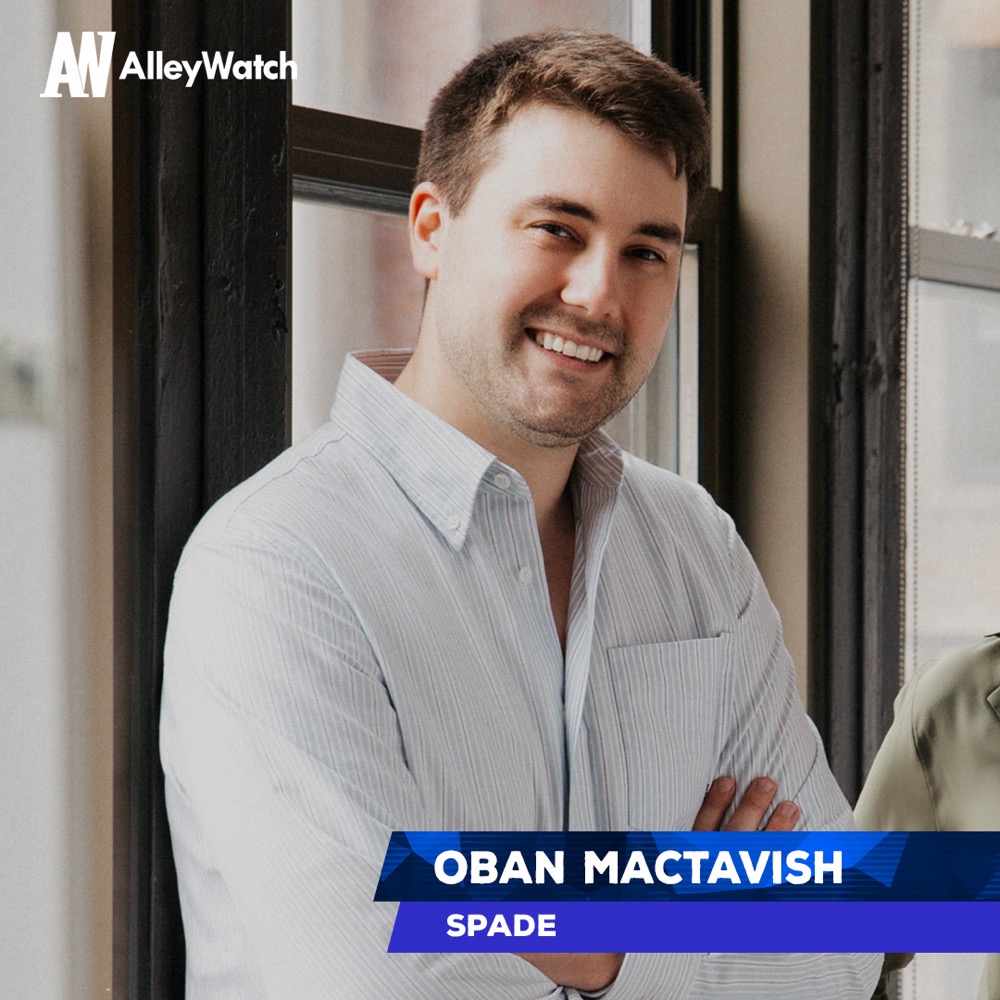 We founded Spade in 2021 based on the realization that the transaction data banks depend on is too messy and inconsistent to use effectively. Every day, billions of transactions are processed, yet the underlying data remains notoriously difficult to use because it passes through multiple systems that strip away context. We saw that this was the primary bottleneck preventing banks from delivering modern user experiences. We started Spade to build the default intelligence layer that turns messy transaction data into structured, verified intelligence.
How is Spade different?
We’re a data company at heart, born with the idea that by starting with a view of businesses and verified merchant data, you could treat the problem less like a cleansing problem and more like a search problem. We take transactions, match them in real time to verified, accurate merchant data, and use transaction data not to train a model to detect a merchant but to further hydrate our merchant database.
Our unique approach results in the fastest product in the market – P99 latency of under 40 milliseconds – and a coverage and accuracy standard that unlocks use cases traditional enrichment vendors can’t support.
What market does Spade target and how big is it?
We target the global financial services ecosystem — primarily Tier 1 banks, neobanks, and fintech leaders. We see enrichment alone as a $10B+ market globally. But the larger opportunity is the shift happening across financial services right now: AI adoption is driving top-down investment in data quality, institutions are moving to the cloud, and banks are increasingly replacing software components previously managed by their cores. That shift expands what Spade can do well beyond enrichment.
What’s your business model?
Spade generally operates on a usage-based model: customers are billed based on the volume of transactions enriched, with a platform fee for automated workflows.
How are you preparing for a potential economic slowdown?
Our product is built for efficiency, which is a priority regardless of the economic climate. In a slowdown, financial institutions look to reduce operational overhead. By automating manual processes like dispute investigations and merchant mapping, Spade helps financial institutions move faster with the teams they have.
We’ve focused on becoming core infrastructure embedded across authorization, attribution, and analytics workflows, which means when budgets tighten, Spade remains an essential vendor.
What was the funding process like?
We’ve known Allen Miller at Oak HC/FT since 2023, so when we reengaged late last year, we weren’t starting a relationship from scratch. He expressed interest in going deeper, and the team ended up being more eager than we expected. Previously, we’d planned to raise toward the end of Q1, but Oak had other ideas. This funding came together quickly at the start of the year.
What are the biggest challenges that you faced while raising capital?
Having relationships with investors is important (don’t let anyone tell you it isn’t). Because we’d planned to raise later in Q1, some of that relationship-building wasn’t as far along as we would have hoped, and we need to be more nimble.
What factors about your business led your investors to write the check?
Investors were impressed by our growth. Last year, we achieved 470% year-over-year revenue growth, processing as many as 1.9 billion transactions on peak days. Leading financial institutions and companies, including Stripe, Bilt, and Mercury, rely on Spade’s transaction enrichment.
They also recognized the technical depth and commercial discipline of our team with decades of experience in fintech, data and AI.
Investors were impressed by our growth. Last year, we achieved 470% year-over-year revenue growth, processing as many as 1.9 billion transactions on peak days. Leading financial institutions and companies, including Stripe, Bilt, and Mercury, rely on Spade’s transaction enrichment.
They also recognized the technical depth and commercial discipline of our team with decades of experience in fintech, data and AI.What sealed it is where the market is heading. Banks can only move toward fully automated, agentic workflows if those systems are built on detailed, verified, structured transaction data. That’s what Spade delivers.
What are the milestones you plan to achieve in the next six months?
With this new funding, we are focused on expanding beyond transaction enrichment to provide a full data and AI platform for payments intelligence. We’ll be expanding our team to meet growing demand from financial institutions and fintechs that rely on Spade to power AI initiatives.
What advice can you offer companies in New York that do not have a fresh injection of capital in the bank?
Really focus on who has bought from you in the past and which other companies look like them. Don’t build tons of new stuff, focus on getting all the customers you can with what you have or something really close to what you have today.
Where do you see the company going now over the near term?
In the near term, we aim to become the default data and intelligence layer for financial services. As banks move toward fully automated, agentic systems, those systems only work if the underlying transaction data is structured, verified, and complete — that’s the problem Spade solves.
We’re focused on becoming core infrastructure for our customers, embedded deeply enough that Spade grows as they grow.
What’s your favorite spring destination in and around the city?
Walking or running in Central Park. It’s genuinely one of the best ways to spend an afternoon in the city!