

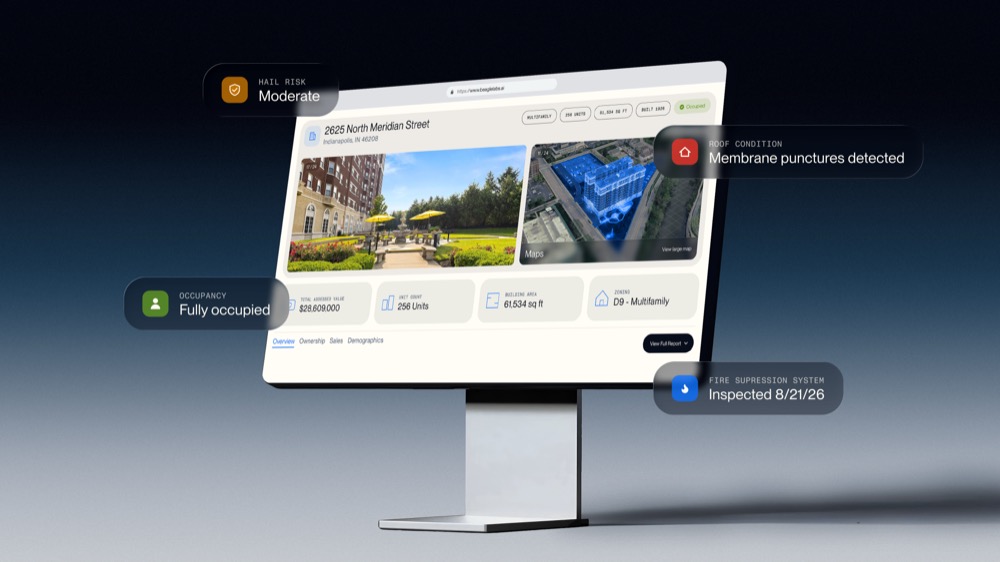
Softer commercial property rates in 2025 left insurers with less margin to absorb a mispriced risk, even as the U.S. surplus lines market grew to a record $143B in direct premiums written, according to AM Best. That squeeze puts pressure on the data behind every policy, yet the details that drive commercial property and liability losses, like electrical systems, plumbing, fire protection and on-site hazards, sit inside buildings that satellite and aerial imagery cannot see, so underwriters still wait 30 days or more for a physical inspection that often comes back incomplete or wrong. Beagle Labs built an AI-enhanced property intelligence platform that gives insurance carriers and managing general agents ground-truth property and liability data in one screen. The company pairs AI analysis with more than 7K verified, Beagle-equipped field inspectors nationwide and returns in-field inspection orders in 14 days or less, the first time. Underwriters can pull an instant digital read on a property and dispatch an inspector with one click only when something needs verification, while every completed inspection adds to a proprietary dataset that sharpens the AI. Several carriers, MGAs/MGUs and wholesale brokerages across commercial property and excess and surplus lines already use the platform.
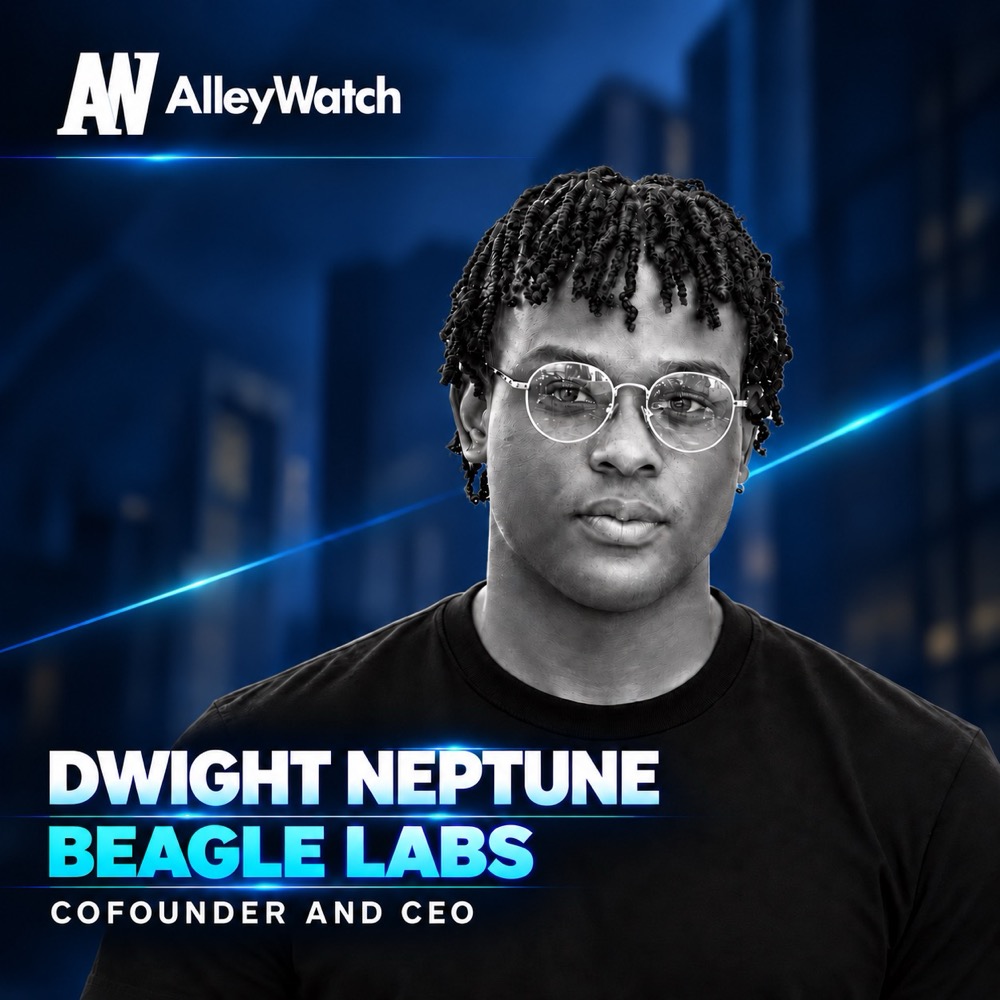
AlleyWatch sat down with Beagle Labs cofounder and CEO Dwight Neptune to learn more about the business, its future plans, recent funding round, and much, much more…
Who were your investors and how much did you raise?
$4.1M pre-seed investment round led by Chingona Ventures, plus Sovereign’s Capital, Remarkable Ventures, C2 Ventures, South Loop Ventures, and Red Bike Capital.
Tell us about the product or service that Beagle Labs offers.:
Beagle Labs’ platform gives insurance carriers and Managing General Agents and Underwriters (MGAs/MGUs) the ground-truth property and liability data remote modes can’t see. Delivered in real-time instead of weeks or months, the company’s technology transforms today’s traditionally slow, inaccurate and expensive physical property inspections with AI-driven analysis of the customized data needed to underwrite property policies faster, accurately and cost effectively.
What inspired the start of Beagle Labs?
 As we worked with insurance clients in our respective backgrounds, we kept running into the same problem: underwriters were waiting 30 days or more for a physical property inspection for commercial property, and when the report finally came back it was often incomplete or wrong, sending everyone back to square one.
Satellite and aerial imagery helped at the margins, but it can’t see inside a building, and it’s often months old by the time an underwriter looks at it. The data that actually drives commercial property and liability losses, like electrical systems, plumbing, fire protection and on-site hazards, still required someone on the ground. My cofounders Luis Guzman, Keelan Gayle, Josie Madingo and I started Beagle Labs in 2023 to make that ground-truth data fast, accurate and usable the first time.
How is Beagle Labs different?
By turning property risk into real-time, actionable insight, Beagle Labs helps insurers and agents streamline underwriting and price risk accurately, delivering every property signal in one screen. Combining AI-enhanced inspections with on-demand coverage from more than 7K verified Beagle-equipped field inspectors nationwide, Beagle Labs turns in-field inspection orders around in 14 days or less, correctly, the first time. Traditional inspections routinely take 30 days or more, and come back with errors requiring re-work.
What market does Beagle Labs target and how big is it?
We serve the underwriters of complex commercial property risk: insurance carriers, MGAs and MGUs, wholesale brokerages and program administrators, with a focus on commercial property and excess and surplus (E&S) lines. Those are exactly the risks that are hardest to assess from a desk and most likely to need a physical inspection before a policy is bound.
It’s a large and growing market. The U.S. surplus lines market alone closed 2025 at a record $143 billion in direct premiums written, according to AM Best, and millions of property inspections are ordered across the U.S. insurance industry every year. Every one of those policies needs accurate property data to be priced correctly, and today most of that data still arrives slowly, manually and with errors.
What’s your business model?
Our model is usage-based, which keeps it simple for underwriters. Customers pay per building for AI-enhanced field inspections, and because commercial and habitational requests often cover dozens of buildings in a single order, one assignment carries real value. Our property intelligence platform is pay-per-use as well, with no heavy enterprise license to push through procurement. An underwriter can pull an instant digital read on a property and, if something needs to be verified, dispatch an inspector with one click.
Our field network is made up of independent, verified inspectors paid per job, so our costs scale with volume. And every inspection we complete adds to our proprietary property data, which makes the digital side of the platform more valuable over time.
How are you preparing for a potential economic slowdown?
We’re built to be resilient. We sit on the pre-policy underwriting side of insurance, so our volume is tied to policies being written and renewed, which carriers keep doing in any economy, rather than to claims events that come and go. Softer conditions actually make us more relevant. Commercial property rates came down meaningfully in 2025, and when pricing gets tighter, carriers can’t afford to misprice risk. Fast, accurate property data protects their margins.
Operationally, we’ve stayed lean. Our field costs are variable rather than fixed, our team is small and focused, and this round gives us room to execute our plan regardless of what the broader market does.
What was the funding process like?
We took our time. We spent three years building and testing the platform with real underwriters before bringing it to market, so by the time we were in serious conversations with investors, we could point to carriers, MGAs and wholesale brokerages already using it. Chingona Ventures leaned in early and led the round, and from there we focused on bringing in partners who understood both the insurance market and what it takes to build a company like ours, rather than simply maximizing the size of the round.
What are the biggest challenges that you faced while raising capital?
Insurance underwriting isn’t a category most generalist investors think about every day, so a lot of our early conversations were spent explaining the problem itself: why a 30-day inspection is so costly to a carrier, and why satellite imagery hasn’t solved it. We also had to help investors see our field network for what it is. It isn’t just an operations business. Every inspection generates proprietary ground-truth data that makes our AI better, and that’s something remote-only platforms can’t replicate.
What factors about your business led your investors to write the check?
A few things came together. First, the problem is real and expensive: slow, error-prone inspections delay policies and leave carriers exposed to risk they can’t see. Second, we had proof, with several carriers, MGAs/MGUs and wholesale brokerages across commercial property and E&S lines already using the platform. Third, our approach pairs AI with a national network of more than 7K verified inspectors, which gives us ground-truth data that remote-only tools don’t have. And finally, the team. Our investors backed people who have been working on this problem for years and know how to do a lot with a little.
What are the milestones you plan to achieve in the next six months?
We’re putting this funding to work quickly. Our priorities are expanding our AI agents, so they take on more of the underwriting workload for customers, bringing more carriers, MGAs and brokerages onto the platform, extending our aerial drone capture capabilities across the network, strengthening customer support and growing our team here in New York.
What advice can you offer companies in New York that do not have a fresh injection of capital in the bank?
Get as close to your customers as you can and let them shape the product. We spent years building alongside underwriters before we raised this round, and that’s what made the difference. Revenue from customers who genuinely need what you’re building is the best capital you can have, because it keeps you honest and gives you leverage when you do raise. Keep your costs variable wherever possible, stay focused on the one problem you solve best, and don’t mistake a tough fundraising market for a verdict on your business.
Where do you see the company going now over the near term?
We want Beagle Labs to be the source of ground-truth property data for commercial insurance underwriting. In the near term, that means making underwriting increasingly digital-first: an underwriter should be able to get an instant, reliable read on a property and only send someone into the field when it truly matters. Every inspection we complete makes that picture sharper, and we’ll keep expanding the asset classes and lines of business we support as customers bring us more of their hardest risks.
What’s your favorite fall destination in and around the city?
The Hudson Valley in late October is hard to beat. A drive up to Cold Spring for a hike and the foliage along the river is the perfect reset.