

The creator economy has matured far faster than the financial infrastructure designed to serve it: YouTube, Spotify, Roblox, and TikTok now distribute tens of billions of dollars annually to independent creators, labels, and gaming studios, yet the capital markets= that fund traditional media have no playbook for underwriting a Roblox studio’s DevEx payouts or a musician’s streaming royalties. The gap is structural. Legacy financiers either demand equity stakes and catalog rights, or simply pass on deals they lack the data to evaluate. Meanwhile, operators with loyal audiences and predictable recurring revenue are forced to choose between dilution or underinvestment at the exact moment their businesses are positioned to scale. CreatorFi solves this by advancing capital against verified, recurring IP-based revenue streams – YouTube AdSense, Spotify royalties, TikTok Shop sales, Roblox and Fortnite in-game earnings – and getting repaid directly from those same cash flows, with no equity taken and no ownership transferred. The company underwrites both the cash flows and the operators behind them, combining platform-level data automation with company-level diligence to fund creators, labels, distributors, and gaming studios across four verticals: Gaming, Music, Content Creators, and Live Experiences.
AlleyWatch sat down with CreatorFi CEO and Cofounder Billy Huang to learn more about the business, the opportunity, recent funding round, and much, much more…
Who were your investors and how much did you raise?
CreatorFi raised $45M in combined equity and debt, with capacity to scale to $100M more. On the equity side, EV3 (Escape Velocity) led CreatorFi’s Series Seed, joined by Uncorrelated Ventures, Protagonist, Aptos Foundation, Pluto 11.11, and P2 Ventures, plus angel investors who are finance and media executives from firms including State Street, J.P. Morgan Chase, and Periscope. On the debt side, VerisFi Capital led as senior lender, with Intrinsic Capital and Kamui Finance providing mezzanine capital. It’s Seed-stage equity paired with CreatorFi’s first institutional credit facility.
Tell us about the product or service that CreatorFi offers.
CreatorFi advances capital against recurring IP-based revenue — YouTube AdSense, Spotify and streaming royalties, Roblox and Fortnite in-game revenue, TikTok Shop sales. Instead of taking equity or a piece of the IP, CreatorFi writes an advance against future cash flow and gets repaid out of that same flow of funds, typically in checks from $500K to $5M. The creator, label, or studio keeps ownership of what they built.
What inspired the start of CreatorFi?
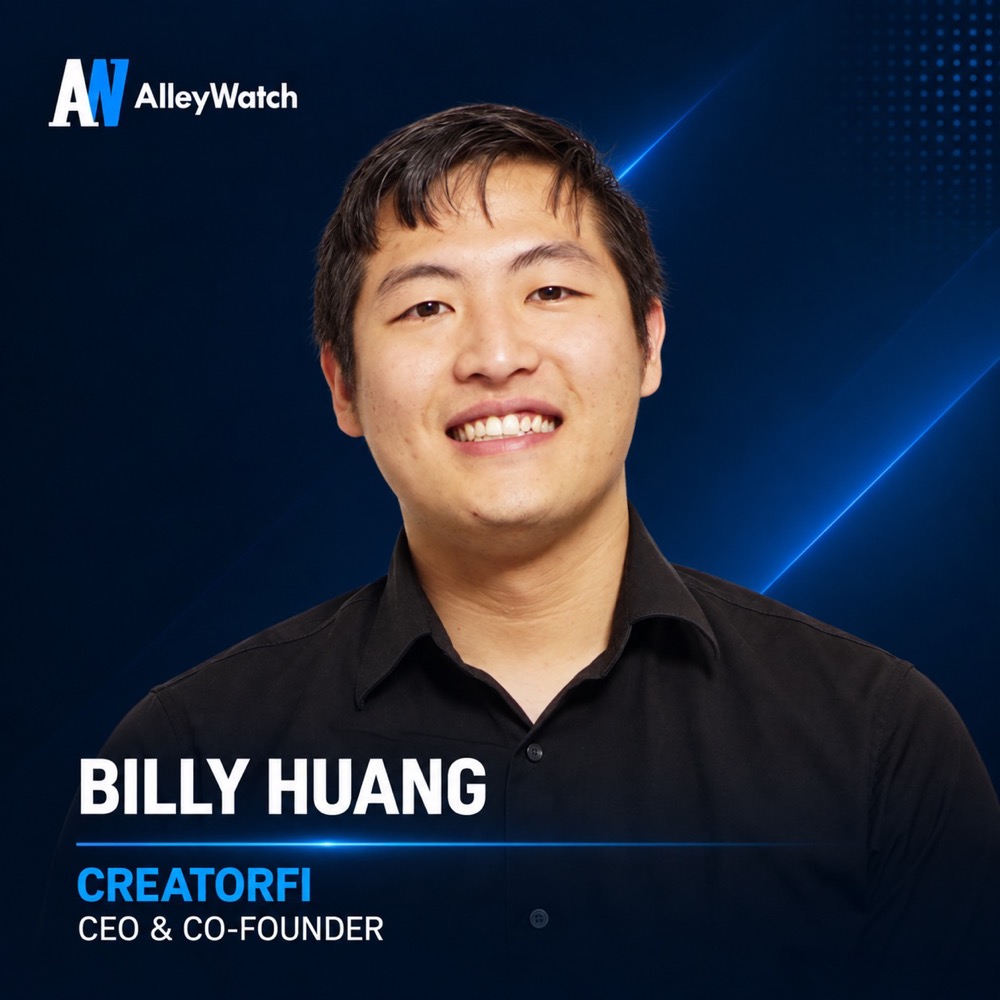 My cofounder Jack Cameron and I spent years building enterprise data and loyalty infrastructure at Insomnia Labs for brands like Coca-Cola, L’Oréal, and Under Armour, and I saw the same gap from the other side: digital creators and media businesses who were powering our campaigns generating real, recurring cash flow but have difficulty accessing financing. The capital that was available to them instead often came from legacy players demanding a majority piece of ownership for an advance. CreatorFi exists to be the credit-first alternative to that.
How is CreatorFi different?
Most capital in the creator economy either take equity in the creator’s company or buy the IP outright. CreatorFi does neither. CreatorFi underwrites the cash flow and the operator — entrenched audiences, revenue CreatorFi can actually intercept and control, real IP-backed cashflows and copyrights.
What market does CreatorFi target and how big is it?
The thesis is simple: digital media is the top-of-funnel for all consumer products now, and that share of attention keeps growing. CreatorFi operates across four verticals — Gaming, Music, Content Creators, and Live Experiences — anywhere there’s an entrenched audience and a controllable, IP-driven revenue stream. It’s a market worth hundreds of billions of dollars in creator and media revenue, most of which has never seen a credit product.
What’s your business model?
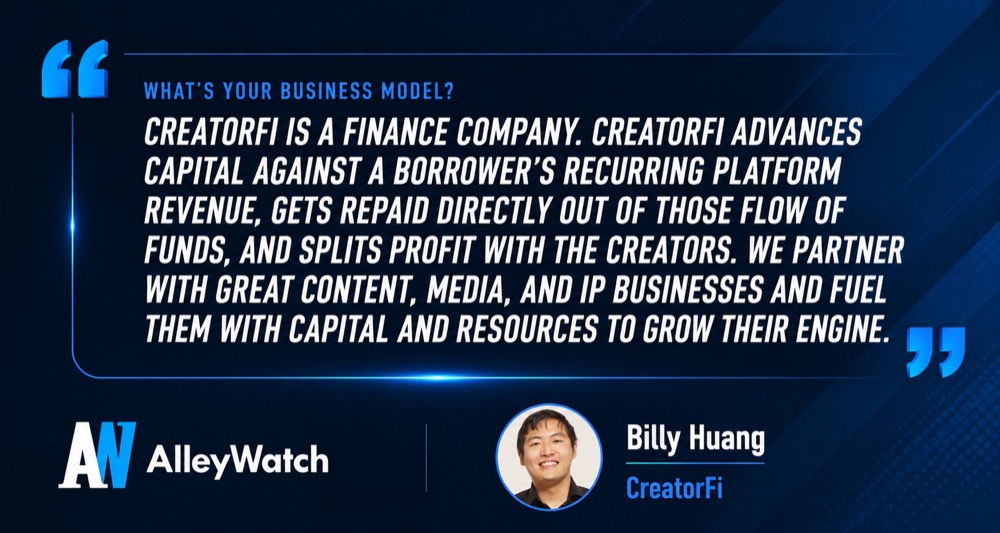
CreatorFi is a finance company. CreatorFi advances capital against a borrower’s recurring platform revenue, gets repaid directly out of those flow of funds, and splits profit with the creators. We partner with great content / media / IP businesses and fuel them with capital and resources to grow their engine.
How are you preparing for a potential economic slowdown?
We believe the biggest disruption of our time, AI, is only complimentary to IP and entertainment businesses. The tools created have empowered creation to a volume and depth we have not seen before.
What was the funding process like?
We ran two parallel tracks — equity and debt — at the same time, which was more work but enabled CreatorFi to build a resilient capital stack suited to the type of fast-moving pace we’ve found entertainment to be.
What are the biggest challenges that you faced while raising capital?
Creator revenue as an asset class is new, so CreatorFi built a lot of the underwriting, tools, and servicing infrastructure — borrowing base mechanics, waterfall structures, flow-of-fund interceptions, data monitoring and tooling — that traditional capital don’t necessarily have existing playbooks for.
What factors about your business led your investors to write the check?
Investors have to fundamentally believe in the attention economy first—then, our worldview that credit is a faster, more accessible way to compound a media company instead of just traditional equity. We started with smaller debt raises to prove out the model incrementally before the current debt proved itself. The small, but effective track record at the time helped build trust with our investors.
What are the milestones you plan to achieve in the next six months?
Growing the ecosystem and pipeline across all four verticals. Building out underwriting capacity and clear data reporting to keep logistics in pace with the deal flow, and standardizing the legal and diligence process so CreatorFi can close deals faster through established risk thresholds.
What advice can you offer companies in New York that do not have a fresh injection of capital in the bank?
Take a look at your assets. If you have recurring revenue from IP, it’s possible you can get an advance against that revenue to help you grow.
Where do you see the company going now over the near term?
Scaling across our verticals — Gaming, Music, Content Creators, and Live Experiences, deepening our existing partnerships, and finding like-minded, growth oriented partners to work with us.