

American nursing homes and post-acute care facilities face a structural crisis that money alone cannot fix: nurse vacancy rates hover near 10%, burnout afflicts half the bedside workforce, and the WHO projects a global shortfall of 10 million nurses worldwide by 2030 – all while the oldest wave of Baby Boomers floods skilled nursing beds at a pace that will only accelerate. Healthcare robotics has existed for years, but prior robots moved meals and linens while the actual heart of nursing work – rounding, sensing patient changes, running assessments, documenting everything – stayed entirely manual. Norbert Health attacks that gap directly, building the physical AI control system that turns standard mobile robots into autonomous nursing assistants capable of making rounds, capturing contactless vitals, running structured assessments, handling patient requests, and writing directly into the EHR. The system senses across four dimensions – physiology, mobility and motor function, cognitive and mental state, and behavioral and social activity – catching the small changes that become readmissions before nurses ever hear an alarm. Already live in skilled nursing facilities since August 2025, Norbert-powered robots achieve 96% patient acceptance and 82% monitoring compliance, nearly twice the baseline for manual remote monitoring, with clinically actionable findings in more than 40% of monitored residents.
AlleyWatch sat down with Norbert Health CEO and Cofounder Alexandre Winter to learn more about the business, its future plans, recent funding round, and much, much more…
Who were your investors and how much did you raise?
We raised a series A round and converted SAFE notes at the same time. Our investors include VCs such as Exor Seeds and CareIT; angel investors like Bill Marino; and tech entrepreneurs like Alexis Le-Quoc and Olivier Pomel (Datadog founders), Saeju Jeong (cofounder of Noom), and Thomas Clozel (founder of Owkin). We also have care operators and physicians who are amazing in the value they bring us outside of the money.
Tell us about the product or service that Norbert Health offers.
We built a key element of what our healthcare system needs to cope with the rapidly growing demand for care that our aging populations are creating: the first effective robotic helper for nurses and nursing assistants.
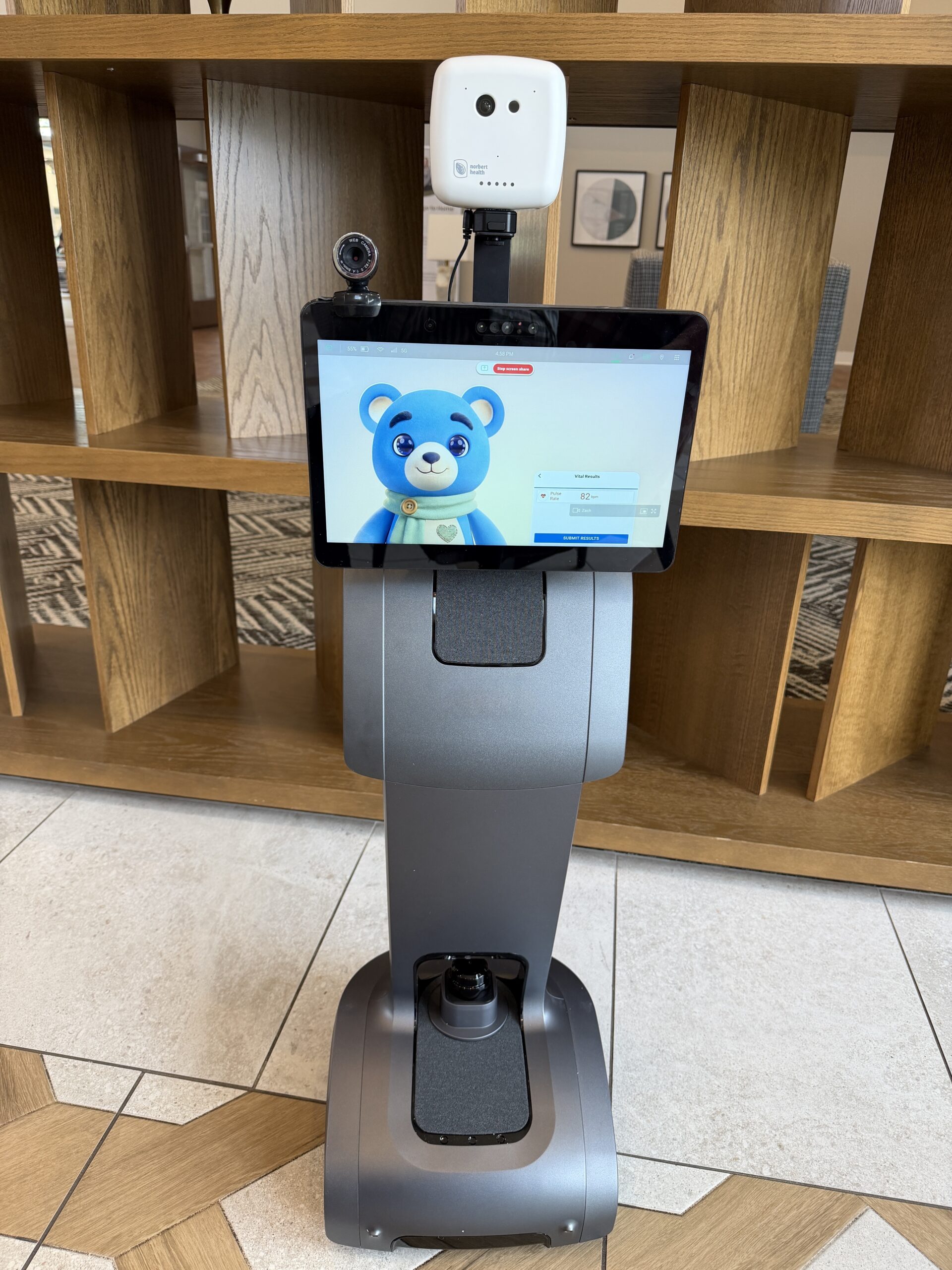
Since 2019, Norbert has been busy building the physical AI and operations backend that enables a standard mobile robot to function as a nursing helper. Our robots make rounds in skilled nursing facilities, run assessments, respond to resident requests, and document everything in the EHR. They sense across four dimensions of a patient’s health: physiology without touching the patient, mobility and motor function, cognitive and mental state, and behavioral and social activity. When something changes in any of them, the nurse hears about it early enough to act.
What inspired the start of Norbert Health?
 Bedside nurses are true heroes. The job is hard because it is a care job, but also because bedside nurses are becoming increasingly rare, while patients in our elder populations are coming to care facilities en masse.
We always knew that technology, AI, and robotics should try to help solve this problem first. This is our mission. We won’t stop working crazy hours until every nurse and nursing assistant out there has the time they need to provide the complex assessments, decision-making, and compassionate connection that only humans can offer, while our brave little robots do all the repetitive and tedious work and surface dense, longitudinal, programmatically generated physiological and behavioral data.
And be deployed on every humanoid robot out there. We are big robotics fans originally 🙂 That might be the real inspiration for Norbert 🙂
How is Norbert Health different?
We are the first company to operate robots with a care role in real care facilities.
Almost everyone in healthcare robotics is building a robot that moves things: meals, linens, and samples. Useful, but that is the periphery of the problem. The heart of a nurse’s day is assessing patients, catching changes early, and documenting it all. Nobody had built a robot that could do that.
We did not build a robot. We built the clinical skills, sensing, and operations backend that turn a standard mobile robot into a nursing helper. Today, that runs on wheels; tomorrow, it runs on humanoids. The hardware will keep getting better and cheaper. The clinical intelligence compounds with every patient encounter, and it is ours.
And it works in the real world: 96% of patients embrace their robot, monitoring compliance is as high as 82%, and clinically actionable findings occur in more than 40% of the residents we monitor.
What market does Norbert Health target, and how big is it?
We start with skilled nursing and post-acute care, including rehabilitation—1.7 million beds in the US. Then come assisted and senior living, with 1.2 million beds; hospitals, with 900,000 beds; and eventually the home, where more than 60 million Americans over 65 want to stay for as long as they can.
In the near term, that represents roughly 200,000 robots and a $16–30 billion annual market. At full deployment, it could be up to 1 million robots and $80–150 billion. The driver behind all of it is structural: nurse vacancy rates near 10%, half of nurses reporting burnout, and the WHO projecting a shortfall of 10 million nurses worldwide by 2030.
What’s your business model?
Robot-as-a-service. Facilities pay a monthly fee per robot based on the successful implementation of specific tasks—for example, data collection for RPM or post-medication check-ins.
A robot costs a fraction of an agency worker, works around the clock, and supports reimbursable monitoring. Once we are on the floor, we grow through more robots per building and new clinical skills over time.
How are you preparing for a potential economic slowdown?
By being conservative with spending and moving toward profitability. We hire carefully, invest where customers are already paying, and build the company so that it does not depend on the next round to exist. That being said, we are rather optimistic about the short-term outlook for robots in healthcare.
What was the funding process like?
We raised SAFE notes before closing this series A. The $14 million includes two SAFE notes, so this $14 million round was raised over approximately 18 months.
I definitely saw the fundraising environment change dramatically over the past two years, but this is a much longer conversation to have!
The other thing we noticed is that two years ago, healthcare robotics was a curiosity. Today, it is a category everyone wants exposure to.
What are the biggest challenges that you faced while raising capital?
We sit at the intersection of healthcare, robotics, and AI. Every investor knows how to evaluate one of those; very few know how to evaluate all three at once. Healthcare investors worried about hardware, while robotics investors worried about healthcare sales cycles. Finding the ones who understood that the value is in the clinical layer—not the chassis—took patience.
Then the round came together with an unusually diverse table: VCs, founders who have built large companies, care operators, and physicians.
Last but not least, the world is going through a massive transformation that affects the world in terms of trillions of dollars—not billions. Each startup has to find its place in this environment to have a chance to raise.
What factors about your business led your investors to write the check?
Real robots on real floors, making rounds on hundreds of residents every day, with measurable clinical impact. We are for real. We have a team that has been shipping medical-grade sensing since 2019. And then there is the timing: physical AI is arriving at exactly the moment when the caregiver shortage is becoming impossible to ignore. Our investors saw that we are in the right place at the right time.
The vision of building the medical skills that every humanoid robot will need in the future is a big vision that makes sense and got our investors excited, too.
You need the ambitious north star and the clear path to get there.
What are the milestones you plan to achieve in the next six months?
Multiply the number of robots and beds we monitor. Ship the next wave of clinical skills we are co-building with our customers: post-fall protocols, pressure-ulcer prevention, cognitive screening, and patient-reported outcomes. Deepen our EHR integrations. Land our first deployments beyond skilled nursing. And grow the team that makes all of that happen.
We are also looking at building strategic partnerships with humanoid-robot companies to enable them to deploy their amazing machines in care environments—but also to help us open doors, figuratively and practically. Indeed, many senior-living or acute-care facilities require our robots to open doors. A humanoid torso on wheels would be our preferred form factor—we already have prototypes!
What advice can you offer companies in New York that do not have a fresh injection of capital in the bank?
If you need capital, focus on value-add angel groups or individual investors who will move the needle for your business as well. Take good care of them, and they will bring you more investors and more customers. It’s a real virtuous circle that defines today’s early-stage financing, IMHO.
And use New York: hospitals, operators, clinicians, investors, and a deep pool of talent are all a subway ride away. Very few cities give a healthcare startup that.
Where do you see the company going over the near term?
Norbert becomes the standard clinical layer for robots in care facilities. We scale in skilled nursing, expand into senior living and hospitals, and keep adding skills so that every robot becomes more useful each quarter. Everything we learn on those floors is exactly what a home-care robot will need in a few years, whatever it looks like. We intend to be the company that teaches robots how to care.
What’s your favorite summer destination in and around the city?
I love taking a couple—or more—hours off to go surfing in the Rockaways. A subway ride, a wetsuit, and a few waves, and you come back to the office with a clear head.