

Space infrastructure runs on solar power, yet the rigid panels that supply it weigh too much, cost too much and take up too much room on a rocket. That limit gets harder to ignore as operators plan about 100,000 satellites by 2030, up from roughly 12,000 today, and as orbital data centers push power demand higher still.
Beyond Reach Labs, a Brooklyn aerospace startup with SpaceX veterans on its founding team, attacks the problem with Flarewing, a deployable solar array that folds to the size of a dining table for launch and unfolds to the length of a football field in orbit. The truss structure stays stiff once deployed, which keeps long arrays from flexing and disturbing a satellite’s pointing, and the company says the design delivers up to 10 times more power per launch than traditional panels. Three configurations reach up to 200 kilowatts, and the company plans to ground-qualify the first by the end of 2026 and build 10 or more units a day by the end of 2027. It builds them at a new 16,000-square-foot Industry City facility, which the company calls the first aerospace hardware manufacturing in the New York area since Grumman built the Apollo lunar module on Long Island.
AlleyWatch sat down with Beyond Reach Labs cofounder and CEO Mitchell Fogelson to learn more about the business, its future plans, recent $10M seed round that brings total funding to more than $11M, and much, much more…
Who were your investors, and how much did you raise? Was it seed, Series A, B, etc.?
We’ve raised $11M+ to date, including an oversubscribed $10M seed round led by Interlagos, with participation from Y Combinator, Augur, TerraForge, and Off Piste.
Tell us about the product or service that Beyond Reach Labs offers.
Most space infrastructure, like satellites and space stations, runs on solar power. Historically, that solar power came from rigid panels that capture solar energy. These rigid panels are expensive, heavy and take up a lot of volume during launch. At the scale needed to run next-generation space infrastructure like orbital data centers, these solutions do not work.
At Beyond Reach Labs, we are taking a different approach to harnessing solar power in space. We build deployable solar arrays that fold to the size of a dining table for launch and expand to the length of a football field in orbit. Our solution produces up to 10 times as much power per launch as traditional panels, making commercial space stations and orbital data centers viable at scale.
What inspired the start of Beyond Reach Labs?
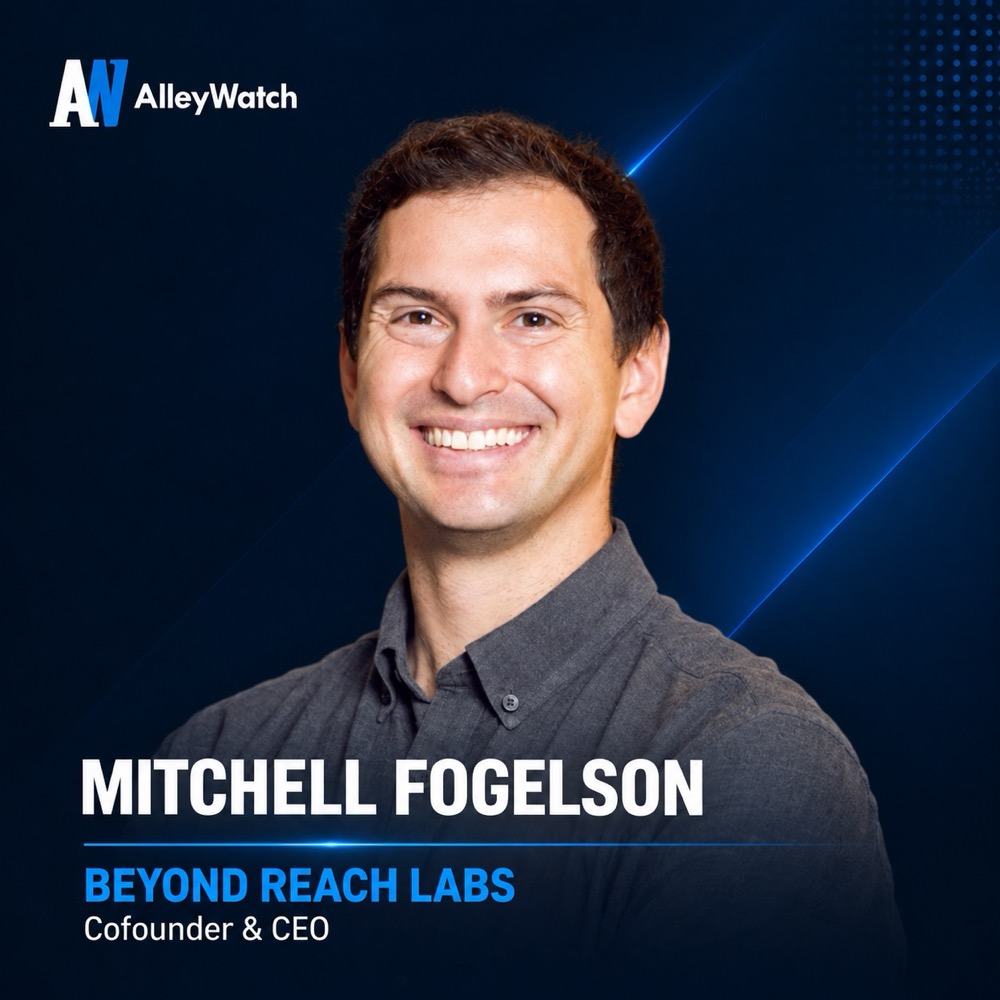 I worked with NASA during my PhD on next-generation space station designs for artificial gravity, where we tried to solve the problem of how to build large space infrastructure that could fit into a single rocket.
On Earth, shipping capacity mostly comes down to how many trucks you can afford. In space, launches are expensive and scarce, so every kilogram and cubic meter counts. The industry needs to get more power to orbit in a smaller package, and that is the problem Beyond Reach Labs is solving.
It’s a problem that persists today for space stations, satellite providers and more, who all need the most efficient way to generate power in space. We felt we had found a unique solution and that the problem we had thought deeply about during my PhD could meet the needs of this large, growing space economy.
How is Beyond Reach Labs different?
In the space industry, there is a big buy vs. build debate. Many companies try to build all their systems in–house, but we are taking a different approach. We are building these specialized systems for companies. Even companies like SpaceX outsource certain specialized systems like their parachutes. My co-founder Pele’s experience developing the parachutes for SpaceX’s Dragon capsule really highlighted that not everything should be built in-house.
Outsourcing these specialized systems lets the team focus on what they do best while also taking advantage of the latest technology. This can allow satellite producers, for example, to accelerate their development. When they don’t need to engineer every part that goes into each satellite, and they work with partners to integrate the other pieces, they can reduce technical debt while also getting new products to market faster.
What market does Beyond Reach Labs target and how big is it?
There are about 12,000 satellites in orbit today, with an expected 100,000 to launch by 2030. Those future satellites result in a total demand of 10 gigawatts needed over the next five years. Beyond Reach Labs’ goal is to supply the power capability to those 100,000 satellites to meet that demand, and it’s a $100 billion opportunity.
What’s your business model?
We build and sell solar at scale for growing, high-power satellite constellations. We own the design, manufacturing, and environmental testing of our systems to ensure they work in space, then deliver and integrate the array with the satellite here on Earth, or with satellite operators, to leverage it for their mission.
Can you please tell us a bit more about your experience building a deep tech company in New York and how your new space supports it?
At first, everyone is surprised that we chose New York. Still, when I explained to people to take a step back and look at the incredible civil engineering and engineering programs that are happening here at the center of the world’s economy, it becomes way more obvious that deep tech should and can exist here.
It’s not that long ago Grumman built the Apollo lunar module here on Long Island. There is a tremendous amount of talent here, and the Northeast has the highest per-capita density of precision machining in America, which is the backbone of our industry. I think deep tech has been here in New York for a very long time. With our new aerospace facility in Industry City, we’re bringing more of those capabilities back to the city and reclaiming New York’s stake in the space economy.
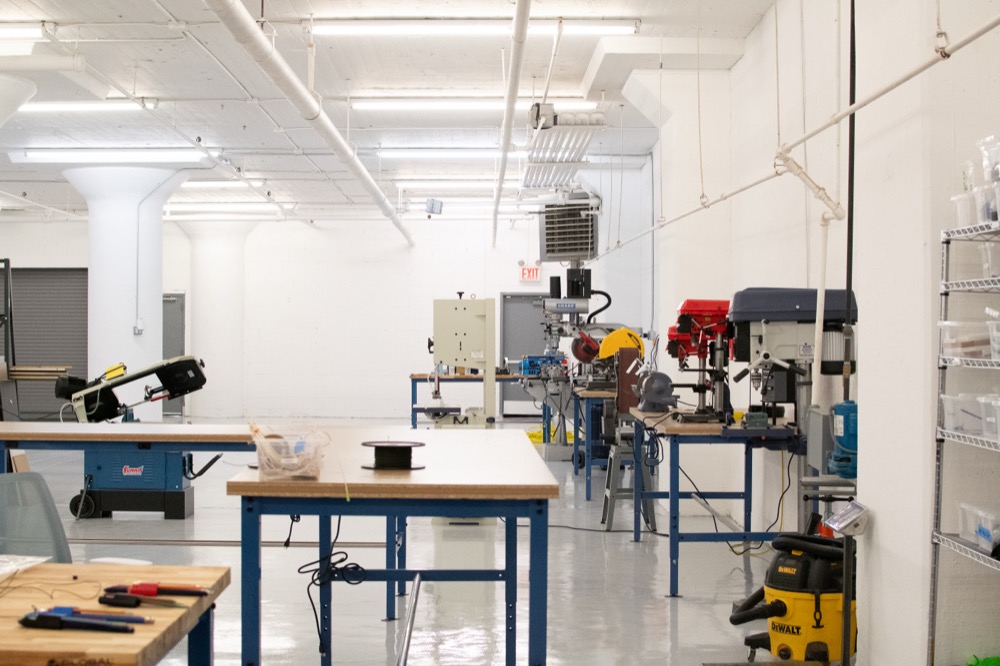
Most people have this expectation that there isn’t the space or capabilities for precision machining and environmental testing in New York. Still, I think we’ve very quickly shown at Industry City that there is tremendous real estate here for these types of ventures that makes sense, both from a commuting standpoint and from a capabilities and support standpoint. The campus’ 50 megawatts of power, oversized freight elevators, and heavy floor loads provide the infrastructure needed to build our product.
Being part of the broader Industry City community has also been tremendous. Through the campus’ innovation ecosystem, we’ve connected with other companies like Adafruit, which has become one of our electronics suppliers, while startups like Ultra Robotics and Highline have provided the technical and startup-specific feedback we need as a new company in New York.
What was the funding process like?
We did our funding during our time at Y Combinator. It’s the best startup accelerator program in the world, and we received amazing support and coaching from the Y Combinator staff. I made about 130 investor calls in nine days, working 12 hours a day from 9 AM to 9 PM. We closed our round by the end of the nine days, but it wasn’t easy. I think people assume that because you’re part of an organization like Y Combinator, funding is guaranteed, but it wasn’t without tremendous effort from many people. We’re incredibly grateful to the amazing people who believed in us and supported us.
What are the biggest challenges that you faced while raising capital?
The hardest challenge was raising the first $100K. The second hardest thing was knowing how to raise capital. For young companies looking to raise funding, it’s all about resistance. Looking back on those 130 calls, I would sometimes wake up with maybe one yes and nine nos. It’s hard not to ruminate on those nos, but that is what’s required when you’re trying to build a company.
What factors about your business led your investors to write the check?
I’d like to think that they really appreciated the Beyond Reach Labs team. Pele and I have been good friends for around 15 years now. We’re not only friends, but have been technical partners through college. We did all our problem sets together, have a clear understanding of our strengths and weaknesses and have a deep appreciation for this specific problem. We have special insight into the landscape and the future of this space economy, so I’d like to think they believed in us and in our capabilities.
What are the milestones you plan to achieve in the next six months?
With the space and resources Industry City has provided us, our focus is increasing capacity: supporting sales, advancing technology and upstarting manufacturing.
What advice can you offer companies in New York that do not have a fresh injection of capital in the bank?
My biggest piece of advice is to talk to customers, get their feedback and build something that people want. The best capital doesn’t come from investors; it comes from customers.
Where do you see the company going now over the near term?
We hope to grow the team, build out the space at Industry City, start delivering solar arrays and have something in space as soon as possible.
What’s your favorite fall destination in and around the city?
I’ve only lived in New York for about 3 months now, so this is my first fall. But coming from the Northeast, there’s nothing more beautiful than the changing leaves, so I’m excited to check out Prospect Park and Central Park in the fall to see the beautiful foliage.