

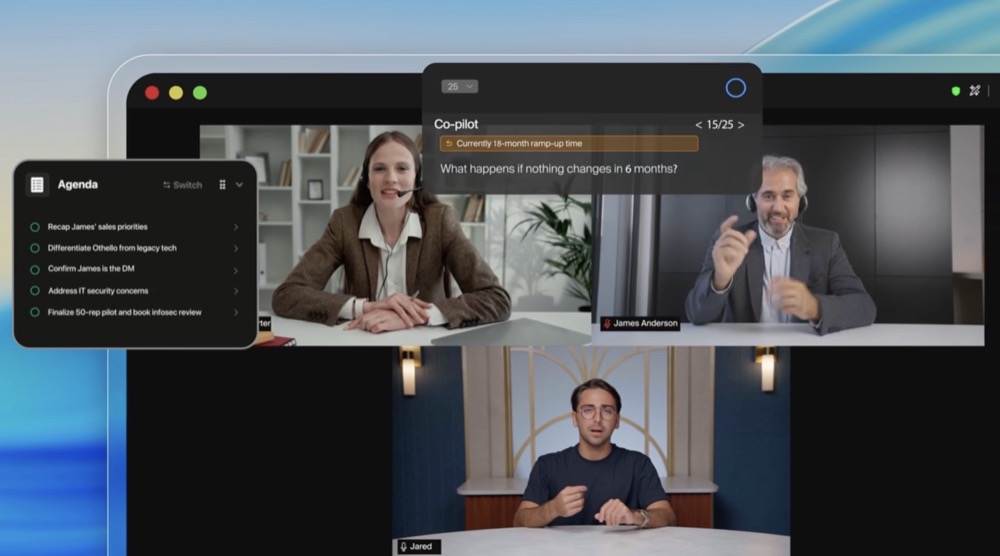
Enterprise sales software has spent a decade getting better at explaining what happened on a call after it ends. Recorders, note-takers and conversation analytics now capture every word, but they arrive too late to change what a rep says when a buyer raises an objection or asks a technical question, and most of those conversations now happen over video. Othello builds AI that coaches sales reps while the conversation is still happening. Its proprietary Hamlet models run in a desktop app that never joins the call as a participant, and they surface the next question to ask, a skipped step in a sales methodology, an objection response, or the right case study in under half a second. The company says more than 50 large enterprises, including Microsoft, Capital One and Lyft, use Othello today. Gartner projects that 60% of B2B seller work will run through conversational interfaces by 2028, up from under 5% in 2023, and Othello wants to sit inside every one of those conversations.
AlleyWatch sat down with Othello Cofounder and CEO Jared Zelman to learn more about the business, its future plans, recent funding round, and much, much more…
Who were your investors and how much did you raise?
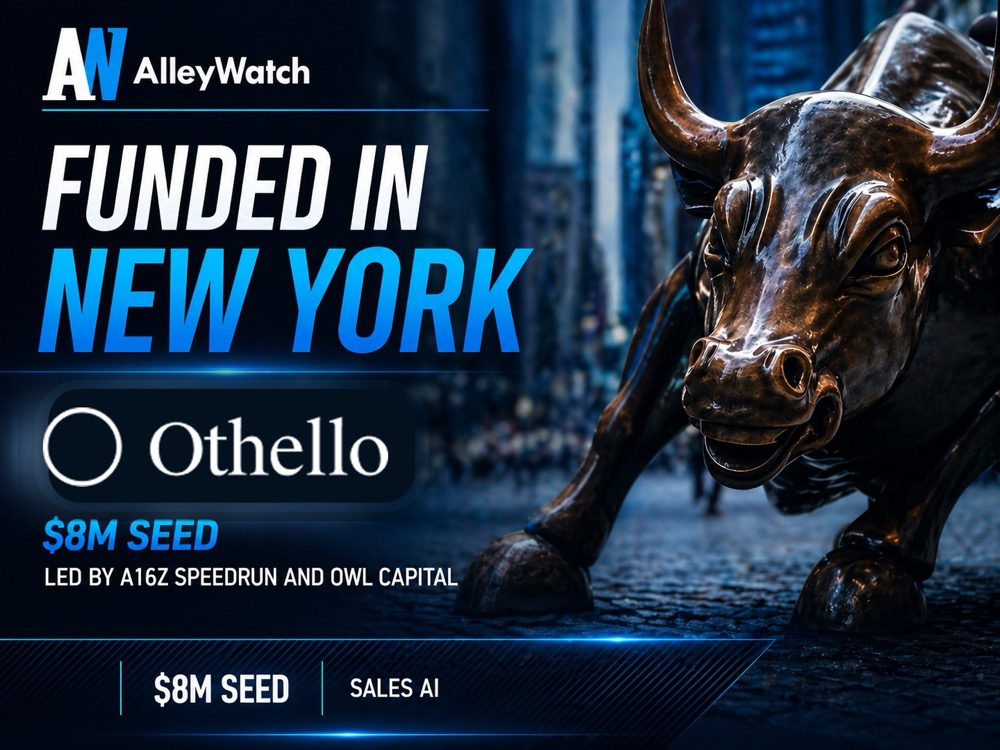
We raised an $8M seed round. It was led by Andreessen Horowitz Speedrun and Owl Capital, with participation from Long Journey Ventures, Stratus Ventures, and a group of founders and operators who invested as angels, including Andy Fang (Cofounder, DoorDash), Chris Larsen (Cofounder, Ripple), Thomas Wolf (Cofounder, Hugging Face), David Cramer (Cofounder, Sentry), Waseem AlShikh (Cofounder, Writer), Dean Sysman (Cofounder, Axonius), Alex and Philippe Bouaziz (Cofounders, Deel), Ryan King (Cofounder, Chime), and Kevin Stein (CEO, TransDigm).
Tell us about the product or service that Othello offers.
Othello provides real-time, live guidance for sales calls. We do this with Hamlet, our family of proprietary AI models. We create our own AI models, built specifically for live sales conversations. For example, Othello can suggest the next question to ask a buyer, flag when a rep skips a step in their sales methodology, help answer a technical question or handle an objection, and surface the right case study at exactly the right moment. More than 50 large enterprises, including Microsoft, Capital One, and Lyft, use Othello today.
What inspired the start of Othello?
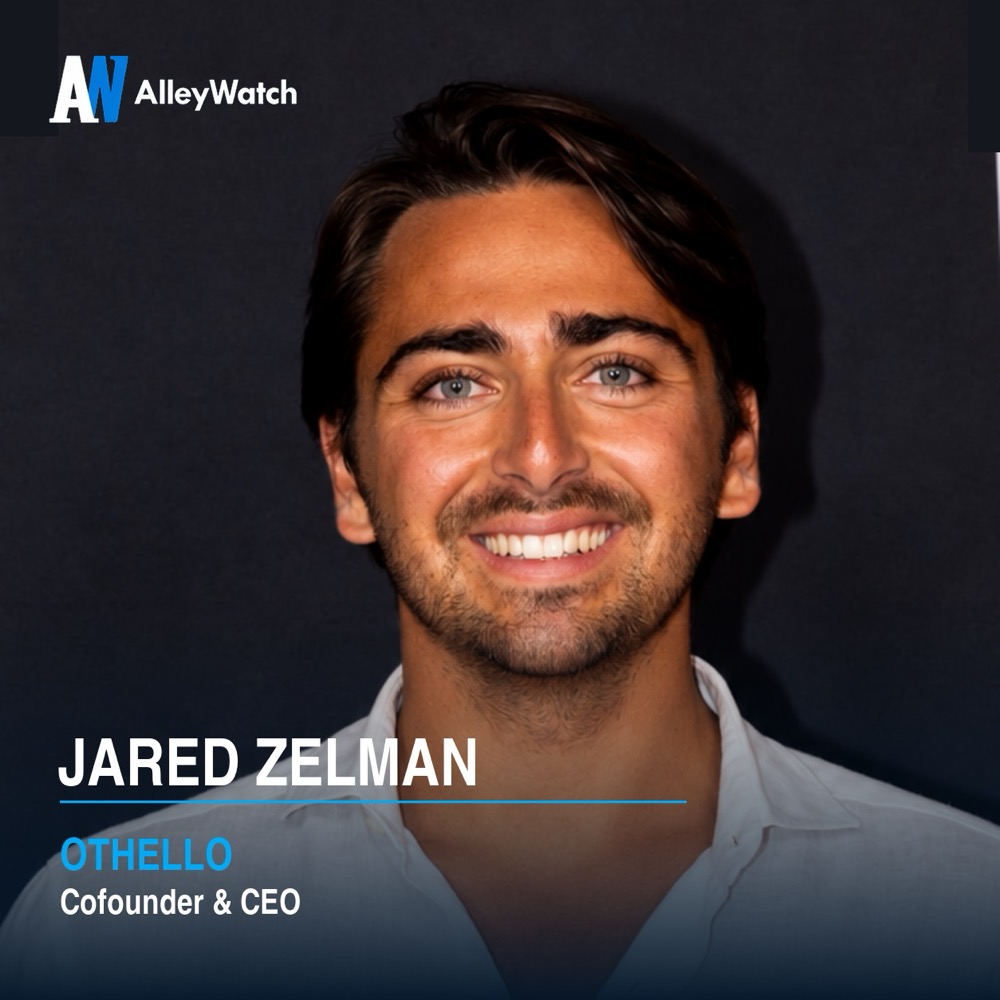 Before Othello, I built Cicero, a company making AI avatars for authors and podcasters. I had a hard time selling it to enterprises, and on those sales calls I had a friend hold up cue cards to remind me what to ask and say next. Those cards made me noticeably better on the call than I would have been alone, and it made me realize that nothing in the sales tech stack did that. Everything helped before or after the call, and the call itself is where deals are won or lost.
The more we looked at it, the clearer it became that live guidance isn’t a software problem, it’s an AI problem. The guidance has to be fast, accurate, and specific to your company, and that requires models built for exactly that purpose. So we built them.
How is Othello different?
Three ways. The first is timing. Othello is built for the live moment. Tools like Gong analyze conversations after they end, which is valuable but can’t change how a rep performs on the call happening right now.
The second is the models. If a suggestion is late, wrong, or generic, it actively hurts the rep, so we built Hamlet specifically for this job rather than relying on a general-purpose model. That is what lets us respond in under half a second with advice that is actually useful.
The third is focus and context. Everything we build, from the product to the models to the go-to-market, is for sales teams. Othello learns each company’s playbook, product material, and the way its best sellers sell, so its suggestions sound like that company and not like a generic assistant. It also doesn’t join the call as a bot, and it can run without storing audio or transcripts for customers in regulated industries.
What market does Othello target and how big is it?
Our market is every sales team. There are more than 2.5 million B2B sales reps in the United States alone, and most of their conversations now happen over video calls. Just as everyone in sales has video calls and Salesforce, everyone in sales will have Othello.
What’s your business model?
We sell mainly to large companies. We charge an enterprise price, and we also offer custom enterprise pricing.
How are you preparing for a potential economic slowdown?
Othello is tied directly to revenue, which is exactly where companies invest when the economy tightens. When a company can’t simply hire its way to its number, getting more out of the sellers it already has matters more than ever, and Othello makes every rep better on every call. That makes us a must-have, not a nice-to-have. With this round behind us and strong demand from large enterprises, we’re well positioned to keep growing in any economic environment.
What was the funding process like?
It was relationship-driven. Andreessen Horowitz Speedrun and Owl Capital led the seed round, and the rest of the round filled in with founders, operators, longtime friends, advisors, and customers who understood the problem or had seen the product firsthand. We went into conversations with a tight story: sales AI has a graveyard of companies that built around the edges of the sales process, the call itself is the one thing nobody has solved, and we built a team that specializes in real-time AI to solve it. We then rounded out the raise with an extension from investors and angels that came together almost overnight, and we announced everything alongside our public launch this month.
What are the biggest challenges that you faced while raising capital?
The biggest challenge is that sales AI is extremely out of fashion. There have been countless failed companies in this category, and the graveyard is longer than Route 66. But that is part of our thesis. Nearly all of those companies focused on the ancillary parts of the sales process, like AI SDRs or note-takers, and none of those affect the only thing that matters, which is the sales call. Investors who had been burned by the category had to be convinced that live, in-call help is a different problem with a different answer, and the best proof was customers using Othello on nearly every call.
What factors about your business led your investors to write the check?
Traction is obvious. Our user retention and success stories speak for themselves, and customers have literally gone out of their way to call our investors. Customers really love our product, and that alone is enough to raise an amazing round.
We also have an incredible team, the greatest team I’ve ever worked with. Our R&D team in particular is one of the most renowned and incredible teams in all of Israel.
What are the milestones you plan to achieve in the next six months?
Our main milestone is expanding across more than 100 multinational customers. To get there, we’ll grow the team from about 20 to 30 people, make our first dedicated sales and customer success hires, and keep building the product, including more personalized guidance for each seller over time. We’ll also keep investing in security and compliance as we scale across the world’s largest enterprises.
What advice can you offer companies in New York that do not have a fresh injection of capital in the bank?
Fundraising can be hard, and my advice is simple: spend a couple of months in San Francisco. That’s all you need. Be social, work incredibly hard, and build the relationships that matter. You don’t have to live there. I spent several months there, and I still go back for several months out of the year to keep those relationships strong.
Then come home and build. You can easily build an amazing business in New York. It’s full of large enterprises that buy software, and you don’t need a big round to start selling to them. And stay close to your customers, because they will teach you more than any amount of planning.
Where do you see the company going now over the near term?
We’re expanding extremely quickly. We’ll grow to 30 employees shortly, and as we scale we expect to land a major new logo every two days. We expect to have hundreds of customers within the next year, and we’re building that team here in New York.
On the product side, we’ll keep making Hamlet faster and smarter and personalize our guidance for each seller over time. Longer term, I’d like to bring the same help to in-person meetings, and I can picture that happening through something like smart glasses. Our goal is for real-time, in-call guidance to be a standard part of every enterprise sales team’s stack, and for Othello to be the product people think of first.
What’s your favorite fall destination in and around the city?
Amagansett, out on the East End of Long Island. After Labor Day the crowds thin out, the beaches are quiet, and it’s the best time of year to be there.