



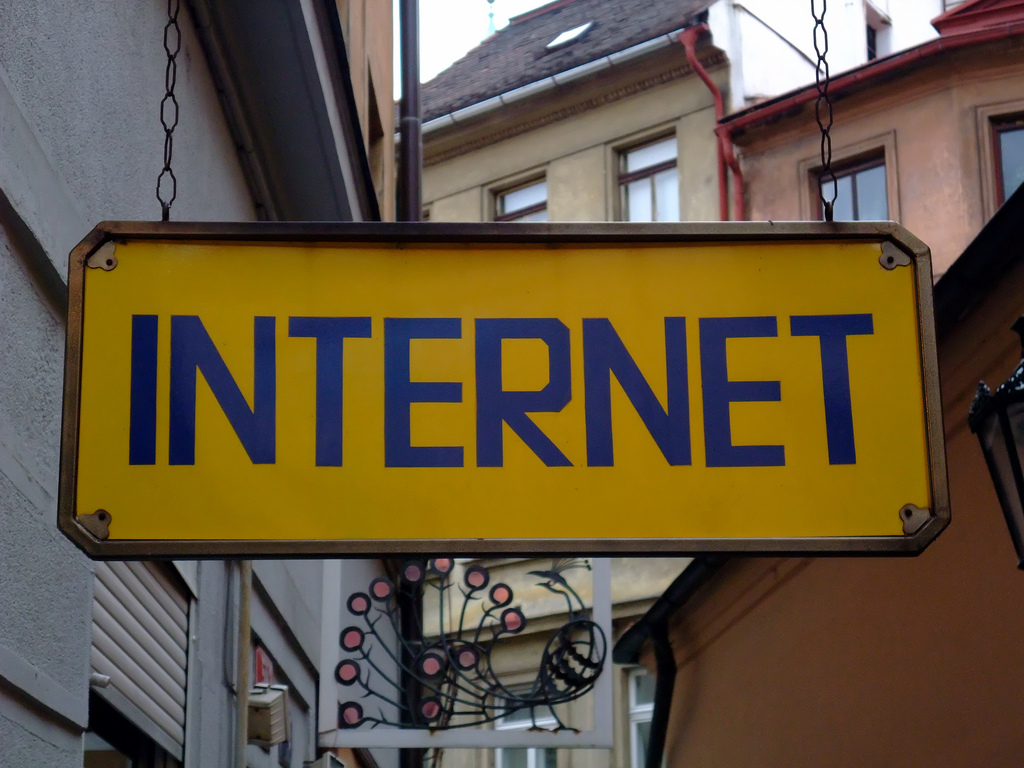
What does it mean to “break the Internet?”
Time Magazine associates the term with celebrities, calling attempts to destroy the Internet “calculated PR maneuvers, designed to maximize social media hype and make themselves, or their projects, the center of attention.”
In 2013, Beyoncé broke the proverbial Internet by dropping an album with no fanfare or PR announcement, letting social media do the work. This year, President Obama’s “Cool clock, Ahmed” tweet “broke the Internet” with more retweets and favorites than any other tweet in the last several years, using it as an opportunity to tap into national anger about racism and discrimination.
Obviously, if the Internet does actually break, it will most likely be because foreign governments do not trust the NSA (The Guardian also thinks sharks could break the Internet by nibbling at underwater cables . . . we will stay tuned in for that one) or because online hacking will destroy the “interwebs.” The moral of the story is that “breaking the Internet” is a strange term to describe tapping into national anxiety or sentiment and reaching unprecedented surges of growth.
According to Dazed, “To break the Internet, then, forms an everyday part of virality vocabulary as well as the kind of function-drive fear that usually accompanies something as huge and unknown as the online world tends to be (see also: the ocean, the afterlife).” Let’s take a quick pause to really think about this, and what it means to humanity that we have the desire to see the Internet completely stop working, to destroy as we simultaneously engage, to engage so much that the behemoth we know as the Internet collapses because of human contact and interaction. What a strange, strange, phenomenon. However, it is not out of tune with humanity’s peculiar compulsion to feel the weight of our own impact.
“The phrase has been bandied about as a reaction to the increasingly meta memetics of our time: the kinds of self-referential holes-in-holes-in-holes that capture the communal imagination to the greatest extent,” continues Claire Marie Healy. At its core, the Internet involves quite a lot of human imagination: What do we think is really happening when we switch on our computers? What are the lines of code that computers speak, but almost nobody else understands? At the heart of “breaking the Internet” lies our confusion about what the Internet really is.
Okay, quasi-philosophical speak over. This question has a purpose for your business. Will a small-to-mid-size business ever “break the Internet” in the sense of unprecedented virality? So far in 2015, President Obama, Taylor Swift, Caitlyn Jenner and Kanye West are sources of the closest thing we have to breaking the Internet, and the term is more often appropriated to use for celebrity viral success. There is no rule about who can tap into what, however, and it should always be your goal to spread your message to whichever audience you hope to reach.
Second, breaking the Internet means taking advantage of a cultural moment or tapping into some sort of national sentiment and discussion with an original, real, contribution. Users are tired of bland and cookie-cutter brand voices. They want something real, some sort of legitimate answer to the question that is being asked.
Finally, the Internet is more about the “moment” than ever before. Timeliness is of the essence. People want to be a part of what’s happening. They want to understand what they’re reading and how their like or follow makes a real difference. If you give your customers and clients a sense of value, they will engage more actively and feel a stronger sense of brand loyalty.
Whether or not your business breaks the Internet is not really important. What is important, though, is understanding the digital moment we are in here in 2016. How can you use your understanding of culture and human desire to make an impact in your social media marketing? That, my friends, is strategy.
Image credit: CC by James_Cridland
