


While construction contributes $2T annually to the U.S. economy, specialty trade contractors – the electricians, plumbers, ironworkers, and carpenters who deploy the workforce that actually builds our infrastructure – have operated with back-office systems that haven’t evolved in decades. This fragmentation creates cascading operational risks: payroll takes 14 hours per week of manual processing, compliance documentation failures can disqualify contractors from entire projects, and labor costs representing 70% of back-office expenses remain poorly tracked and analyzed. The 2023 updates to the Davis-Bacon Act amplified these challenges, requiring contractors to rigorously document wage classifications and payroll compliance or face financial penalties and project exclusions at a time when they can least afford disruptions. Trayd addresses this infrastructure gap with a unified back-office operating system that automates the variables specialty contractors face daily like union rules, prevailing wage calculations, multi-state tax obligations, and project-level compliance – consolidating payroll, HR, scheduling, and field tracking into a single platform. The company has reduced average weekly payroll processing from 14 hours to 27 minutes, achieved 600% year-over-year revenue growth, and now processes payroll for contractors across the United States. With specialty trade contractors outnumbering general contractors 400 to 1 yet historically overlooked by construction technology, Trayd’s platform positions the company to capture a significant share of the $260B in annual payroll that moves through the construction ecosystem.
AlleyWatch sat down with Trayd CEO and Cofounder Anna Berger to learn more about the business, its future plans, and recent funding round, and much, much more…
Who were your investors and how much did you raise?
We raised a $10M Series A led by White Star Capital, bringing our total funding to $15M. Suffolk Technologies and Y Combinator, both existing investors, doubled down with follow-on investments. RXR, the New York-based real estate and technology investment firm, also joined the round as a new strategic investor.
Tell us about the product or service that Trayd offers.
Trayd is a construction payroll and workforce platform built for specialty trade contractors. The platform automates the complex variables that affect a worker’s compensation on any given day: job rates by trade type, state versus federal or private project scope, union rules, prevailing wage requirements, and multi-state tax obligations. What takes most contractors 14 hours of manual payroll processing each week now takes 27 minutes on Trayd. The platform also handles HR, scheduling, and field tracking, giving contractors a single system for payroll, compliance, and workforce deployment.
What inspired the start of Trayd?
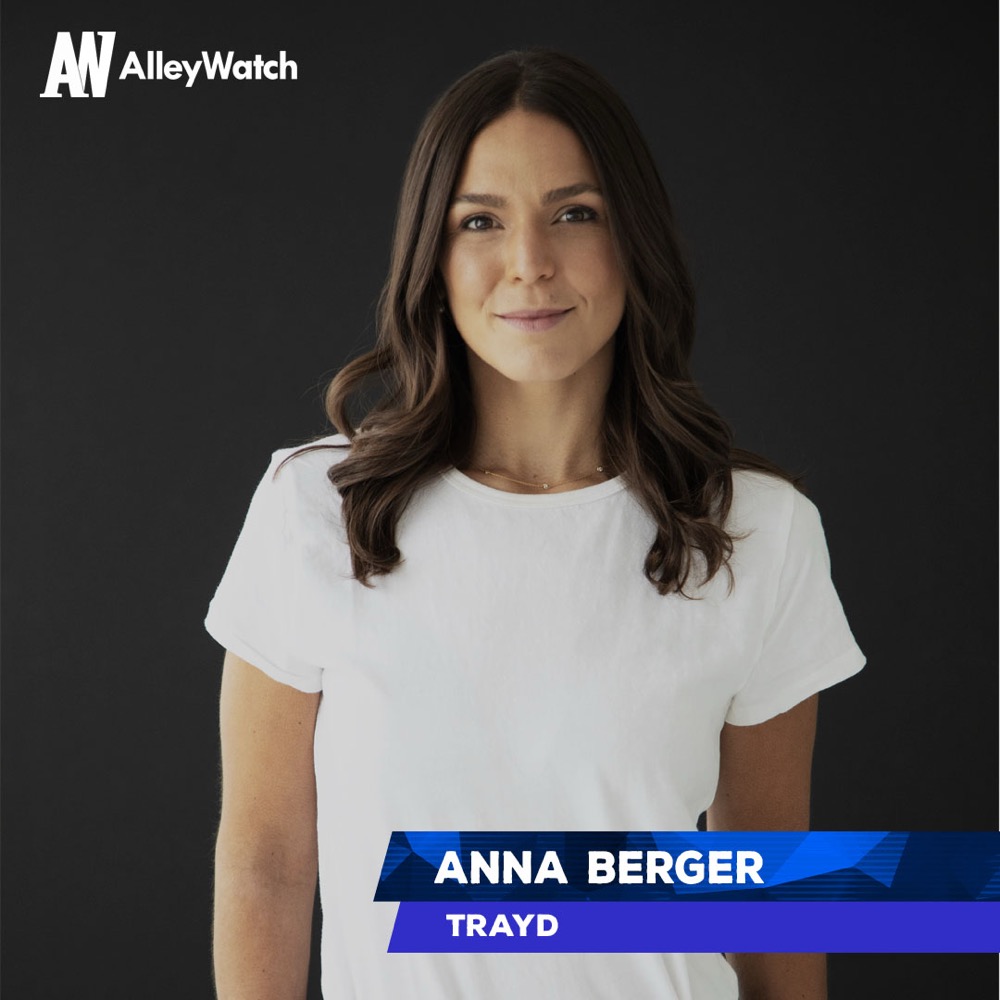 I grew up in a construction family and saw firsthand how much time, money, and energy gets lost to back-office chaos. Construction payroll is one of the most complex payroll environments that exists. Between union rules, prevailing wage requirements, multi-state taxes, and project-level compliance, most systems simply can’t handle it—they break.
I partnered up with my cofounder, Cara Kessler, who spent a decade leading web platform engineering at LinkedIn. Together, we saw the opportunity to bring modern infrastructure, strong product thinking, and real engineering rigor to an industry still running critical operations on spreadsheets, patchwork systems, and manual processes.
We founded Trayd in 2021 and have been building the back-office operating system ever since.
How is Trayd different?
Most construction technology has been built for general contractors—they have the budgets and the buying power. But specialty trade contractors outnumber GCs 400 to 1, and they’re the ones actually deploying the workforce that builds our cities.
Trayd is built specifically for them.
We handle the complexity that defines their business: union rules, prevailing wage requirements, multi-state taxes, and project-level compliance—all in one system.
On a typical job, a single worker can earn four different pay rates in one day depending on the site, classification, union status, and jurisdiction. Most systems can’t handle that—they break or push the work back onto the contractor.
We built Trayd to handle it natively.
What market does Trayd target and how big is it?
Trayd is built for specialty trade contractors across the United States—the electricians, plumbers, ironworkers, concrete crews, and carpenters building the infrastructure around us.
Construction is a $2T industry in the U.S., and specialty trades make up the majority of that workforce. Despite their scale, they’ve been largely ignored by modern software.
This is a massive, fragmented segment where the work is complex—and the systems haven’t kept up.
Trayd started in New York and the greater Northeast, where union density and regulatory complexity are highest, and is now expanding nationwide.
What’s your business model?
Trayd is a SaaS platform with usage-based pricing tied to payroll.
Customers pay based on how many workers they run through payroll, which means our revenue scales directly with their workforce and project activity.
How are you preparing for a potential economic slowdown?
Construction has historically been a resilient sector, particularly in infrastructure, which remains mission critical regardless of macro conditions. Our cities still need to be built, maintained, and repaired—that doesn’t change with market cycles.
We’re focused on supporting the contractors executing that work and are proud to power a segment of the economy that continues to move, even in slower cycles.
What was the funding process like?
Fast and focused. We went into the raise with real momentum—strong YoY growth, clear product-market fit, and a very defined story around who we serve and why it matters. That allowed us to run a tight process and close the round in a few weeks.
It wasn’t about convincing people the problem exists—that’s undeniable. It was about showing we’re the team to solve it, and that the time is now.
What are the biggest challenges that you faced while raising capital?
The biggest challenge is that we’re building foundational infrastructure in a moment where the market is fixated on AI.
There’s a lot of excitement around applying AI to construction, but the reality is most back-office data in this industry isn’t structured or reliable enough for AI to actually be effective.
What investors have to understand is that before AI can create value here, the underlying systems need to exist.
That’s what we’re building. Trayd is structuring construction payroll, workforce, and compliance data in a way that actually makes it usable—and ultimately, powerful.
What factors about your business led your investors to write the check?
I’d boil it down to three things:
- A massive, underserved market — over $260B in payroll moves through the U.S. construction ecosystem each year, and specialty trades have been largely overlooked by software.
- Control points with real complexity — Trayd isn’t a “nice to have.” Payroll, compliance, and workforce management are mission critical, and incredibly difficult to get right. When these systems are off, the business breaks.
- Execution and traction — we’re growing quickly, processing real payroll every week, and deeply embedded in our customers’ operations. Our unit economics and early ACV expansion point to significant long-term potential.
Once Trayd is implemented, it becomes very hard to rip out.
What are the milestones you plan to achieve in the next six months?
The next six months are about doubling down on what’s already working.
We’re focused on continuing to scale revenue and expand nationally, while deepening the product across union workflows, compliance, and job costing.
At the core, it’s about strengthening our position as the system of record for construction back-office operations.
What advice can you offer companies in New York that do not have a fresh injection of capital in the bank?
Focus on the fundamentals. Get close to your customers. Listen closely and build something they actually need. Drive revenue. Stay disciplined on spend.
There’s a lot less room for noise right now—companies that are clear on their value and execute well will stand out.
Where do you see the company going now over the near term?
At Trayd, we are fortunate to have found manifest product-market fit.
In the near term, we’re honing in on becoming the single system of record for how construction companies run their back office. That means deeper product, more customers, and expanding beyond our initial markets.
The goal is to be the infrastructure layer that payroll, compliance, and workforce management runs on.
What’s your favorite spring destination in and around the city?
You can usually find me walking along the West Side Highway or wandering through the West Village when the weather finally turns.
After a long New York winter, there’s nothing better than those first warm days when the city wakes back up.