

Medicare covers more than 70 million Americans and now consumes over $1 trillion in annual spending – yet the system still pays providers for the volume of services delivered, not for whether patients stay healthy. That misalignment has created a structural problem: most primary care practices want to shift toward value-based care but lack the technology infrastructure to manage financial risk, predict patient deterioration, and coordinate interventions at scale without simply adding headcount. Pearl Health gives those practices the operating platform to make that shift work, combining AI-driven patient prioritization, predictive risk modeling, and workflow automation to help providers identify which patients need attention before problems become emergencies. The company manages approximately $3.6B in annualized medical spend across a network of more than 10,000 providers in over 40 states, and it reached profitability in 2025 – a threshold few value-based care companies at comparable scale have achieved. Its Performance Intelligence and Care Orchestration capabilities now extend across both Traditional Medicare and Medicare Advantage, giving health systems and physician groups a unified platform to compete in outcomes-based payment programs without proportionally expanding their administrative workforce.
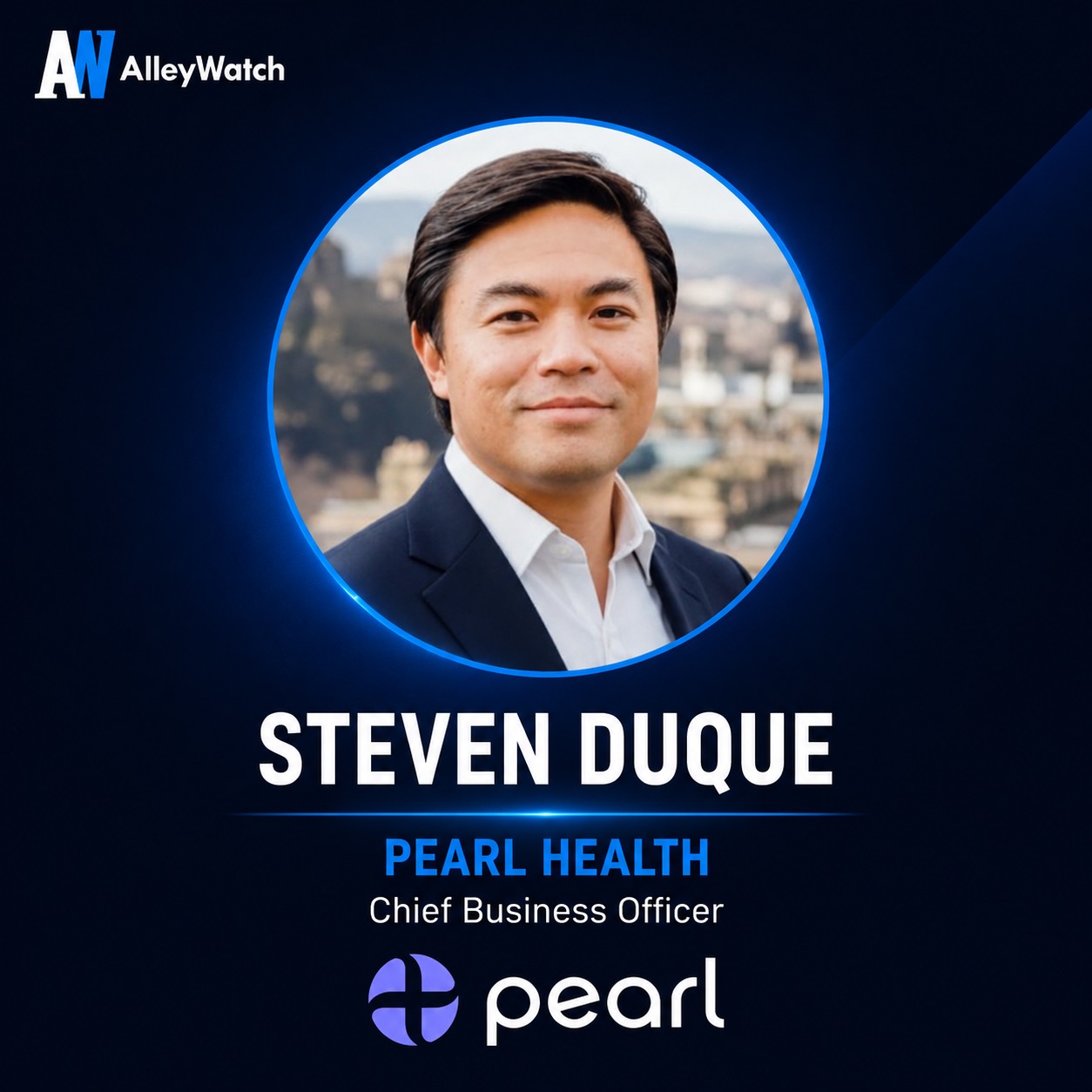
AlleyWatch sat down with Pearl Health Chief Business Officer Steven Duque to learn more about the business, its future plans, recent funding round, and much, much more…
Who were your investors and how much did you raise?
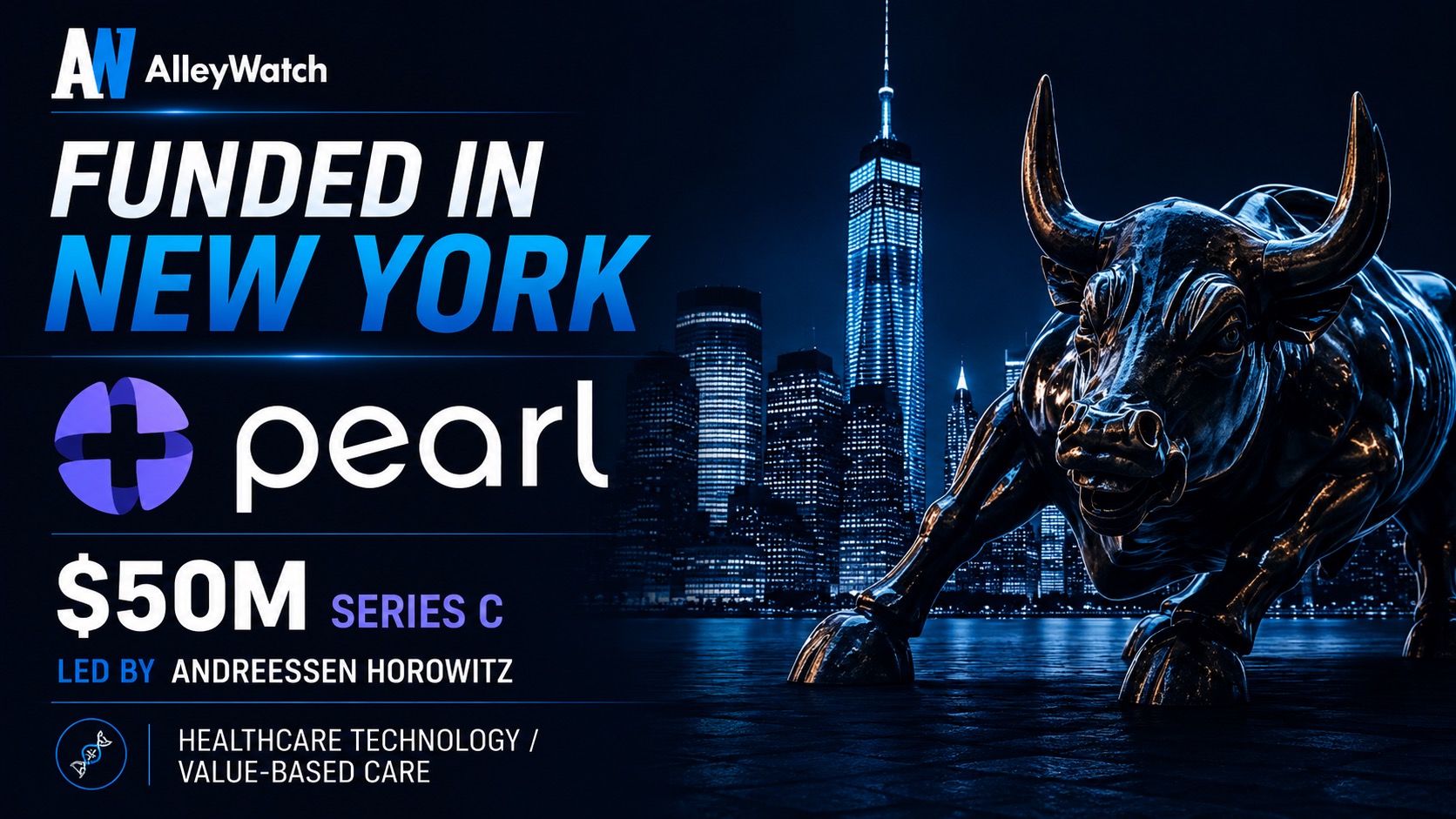
Pearl recently raised a $50 million Series C equity round led by Andreessen Horowitz, with participation from Viking Global Investors, AlleyCorp, and Ulysses Capital, plus a $60 million debt facility led by Trinity Capital.
Tell us about the product or service that Pearl Health offers.
Pearl Health helps healthcare organizations succeed in value-based care by giving them the technology to improve clinical outcomes while managing the total cost of care. This means rewarding providers for keeping patients healthy, rather than for the volume of services delivered.
Our platform combines deep healthcare data with AI-powered workflows to help providers identify which patients could benefit most from proactive attention, understand why, and coordinate the right interventions at the right time.
The capital from this round enables us to supercharge our investments in two core capabilities: Performance Intelligence and Care Orchestration. Performance Intelligence will give care teams a real-time, natural language view of quality, utilization, and financial performance across their patient population. Care Orchestration applies AI to automate routine operational work like scheduling annual wellness visits, conducting post-discharge follow-ups, and managing outreach, so that clinicians can have more quality time with patients.
What inspired the start of Pearl Health?
 While at Oscar Health, our CEO, Michael Kopko, became focused on the challenge of aligning providers with patient outcomes through incentives, insights, and technology. He saw firsthand how hard that is to do from the health plan side alone. As Medicare introduced new innovative payment models with richer claims data, he and his cofounders – Dr. Jeff De Flavio, Kevin Ryan, and Ankit Patel – saw an opportunity to combine technology, data, and provider partnerships into an operating system to make the shift to value actually work in practice. That was six years ago, and the mission hasn’t changed since.
How is Pearl Health different?
Most approaches to value-based care solve the need for greater care coordination by adding people: more care coordinators, more staff on the phone, more manual outreach. That model is expensive and hard to scale. You can’t cost-effectively hire your way to delivering consistently great care across an entire patient population.
Pearl takes a technology-first approach. We combine AI, automation, and clinical intelligence to help care teams focus their attention where it matters most, while doing the work that would otherwise require a larger workforce: flagging patients at risk of unnecessary ER admission, automating scheduling and follow-up outreach, and surfacing the highest-impact action for a care team to take next. That creates meaningful operating leverage for care organizations to improve patient outcomes without proportionally increasing administrative overhead.
What market does Pearl Health target and how big is it?
Pearl serves the U.S. Medicare market. More than 70 million Americans rely on Medicare today, with Medicare annual spending exceeding $1 trillion and climbing. As payment models continue shifting toward value-based care, we believe the need for intelligent care orchestration will only continue to grow and our technology will be adaptable to other payor contexts.
What’s your business model?
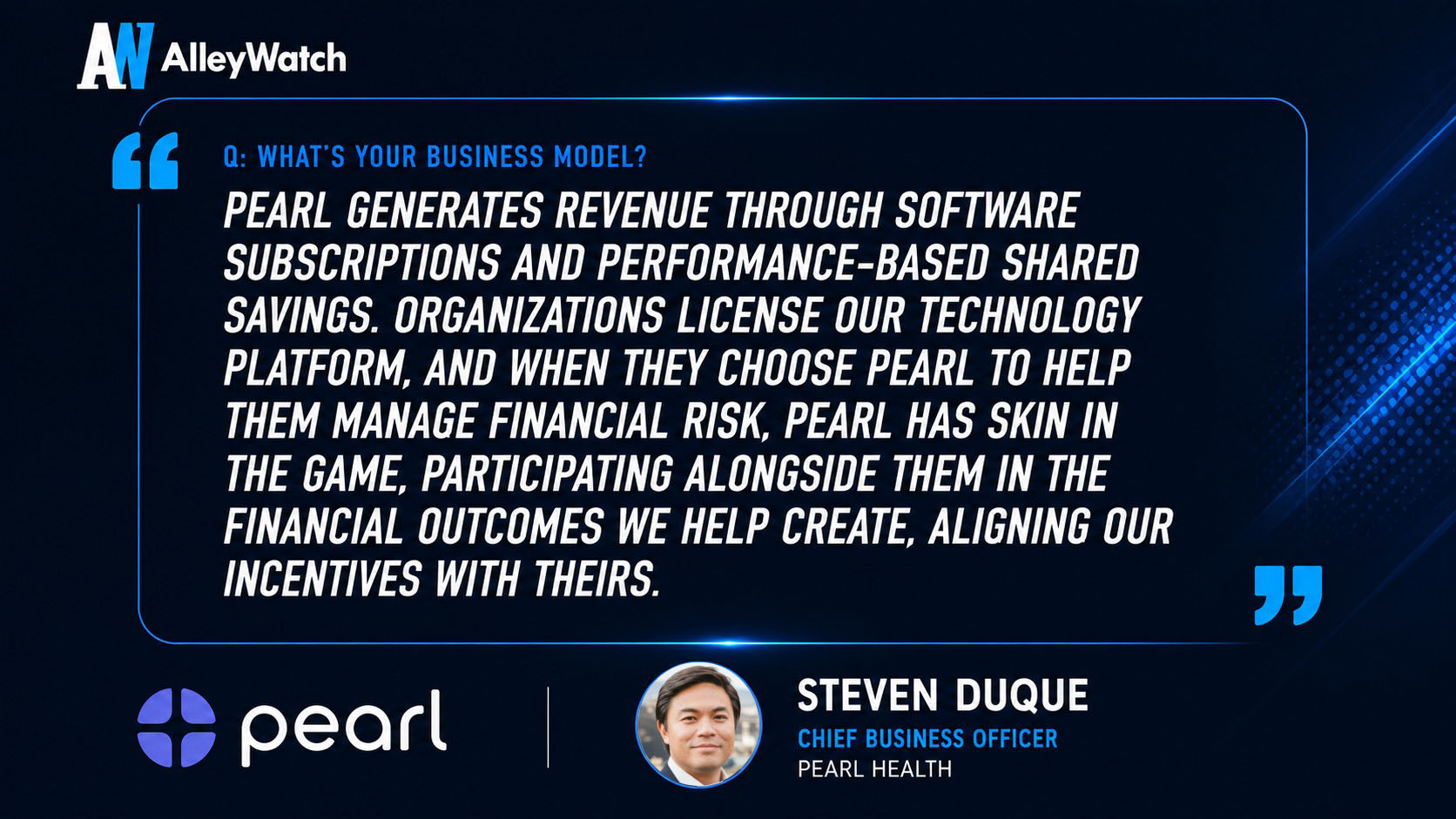
Pearl generates revenue through software subscriptions and performance-based shared savings. Organizations license our technology platform, and when they choose Pearl to help them manage financial risk, Pearl has skin in the game, participating alongside them in the financial outcomes we help create, aligning our incentives with theirs.
How are you preparing for a potential economic slowdown?
Pearl reached profitability in 2025 while still growing rapidly and tripling the number of patients we support. That combination of disciplined growth and profitability gives us the flexibility to continue investing through changing market conditions while remaining focused on long-term value creation.
What was the funding process like?
We entered this raise trending toward profitability and consistently strong growth. That allowed us to focus less on raising capital and more on finding the right partners who shared our long-term vision for transforming healthcare through technology. We’re thrilled to partner with leading investors such as Andreessen Horowitz, Viking Global Investors, AlleyCorp, Ulysses Capital, and Trinity Capital.
What are the biggest challenges that you faced while raising capital?
We’re fortunate that our business fundamentals, strong growth, profitability, and clear long-term vision resonated with investors, particularly our early investors, many of whom chose to re-invest. Rather than convincing investors the opportunity existed, most conversations centered on how large the opportunity could become.
What factors about your business led your investors to write the check?
We believe our investors recognize that value-based care has reached an important inflection point. Advances in AI, combined with years of platform investment and Pearl’s proven customer outcomes, create an opportunity for Pearl to support better clinical and financial performance across the Medicare ecosystem at scale.
We believe our investors recognize that value-based care has reached an important inflection point. Advances in AI, combined with years of platform investment and Pearl’s proven customer outcomes, create an opportunity for Pearl to support better clinical and financial performance across the Medicare ecosystem at scale.
What are the milestones you plan to achieve in the next six months?
For the rest of 2026, we’ll continue expanding our provider network, growing our Medicare Advantage capabilities, preparing customers for launch of the ACO LEAD Model in 2027, and investing in AI that helps care teams deliver better outcomes with less administrative effort.
Ultimately, every investment we’re making is aimed at helping healthcare organizations improve both the quality and economics of care, making our healthcare system more sustainable and healthcare more affordable for seniors and taxpayers.
What advice can you offer companies in New York that do not have a fresh injection of capital in the bank?
As our CEO Michael Kopko often reminds us, capital doesn’t build great companies. Clarity and great people do.
Some of the best problem-solving I’ve seen, including our own, happens under constraint, because it forces you to figure out what actually matters to your customers rather than what’s nice to have. My advice is to earn real customer traction to drive real proof points with the resources you have now. Those proof points will become your strongest fundraising story later.
Where do you see the company going now over the near term?
Our ambition is to become the leading technology platform for Medicare and a trusted partner of leading healthcare organizations. That means helping more providers and payers deliver better health outcomes at lower cost, while expanding the role intelligent software can play in day-to-day healthcare operations.
What’s your favorite summer destination in and around the city?
One of my favorite things about New York in the summer is how much of the city moves outdoors. SummerStage, Shakespeare in the Park, and Bryant Park’s performances are all fantastic.
I’m also looking forward to spending time with Mike and the team in our FiDi office overlooking the Statute of Liberty and the Staten Island Ferry.