


Outpatient practices are running on thinner margins than they have in years, with support staff salaries and benefits consuming roughly 25% to 30% of revenue while reimbursements stay flat. Corporate entities now own about 30% of U.S. physician practices, according to the AMA, and those multi-site groups carry the same labor shortages and fragmented systems across dozens of locations, yet they still staff phones, fax queues, and payer calls with people, and hiring more of them no longer closes the gap. Confido Health builds AI agents that finish that administrative work across patient access and revenue cycle, instead of only storing the information. Its CareOS platform works across phone, text, email, and fax in more than 20 languages, scheduling appointments, verifying insurance, working prior authorizations, managing refills, and calling patients about open balances, then writes every completed task back to the practice’s EHR. The agents connect to more than 50 existing systems, so practices keep their tech stack, go live in four to six weeks, and gain capacity equal to three to five full-time employees on average within three months. Today the company supports about 3,200 providers across more than 1,500 sites in 27 states, and it grows by selling to private equity sponsors that roll it out across their portfolio companies.
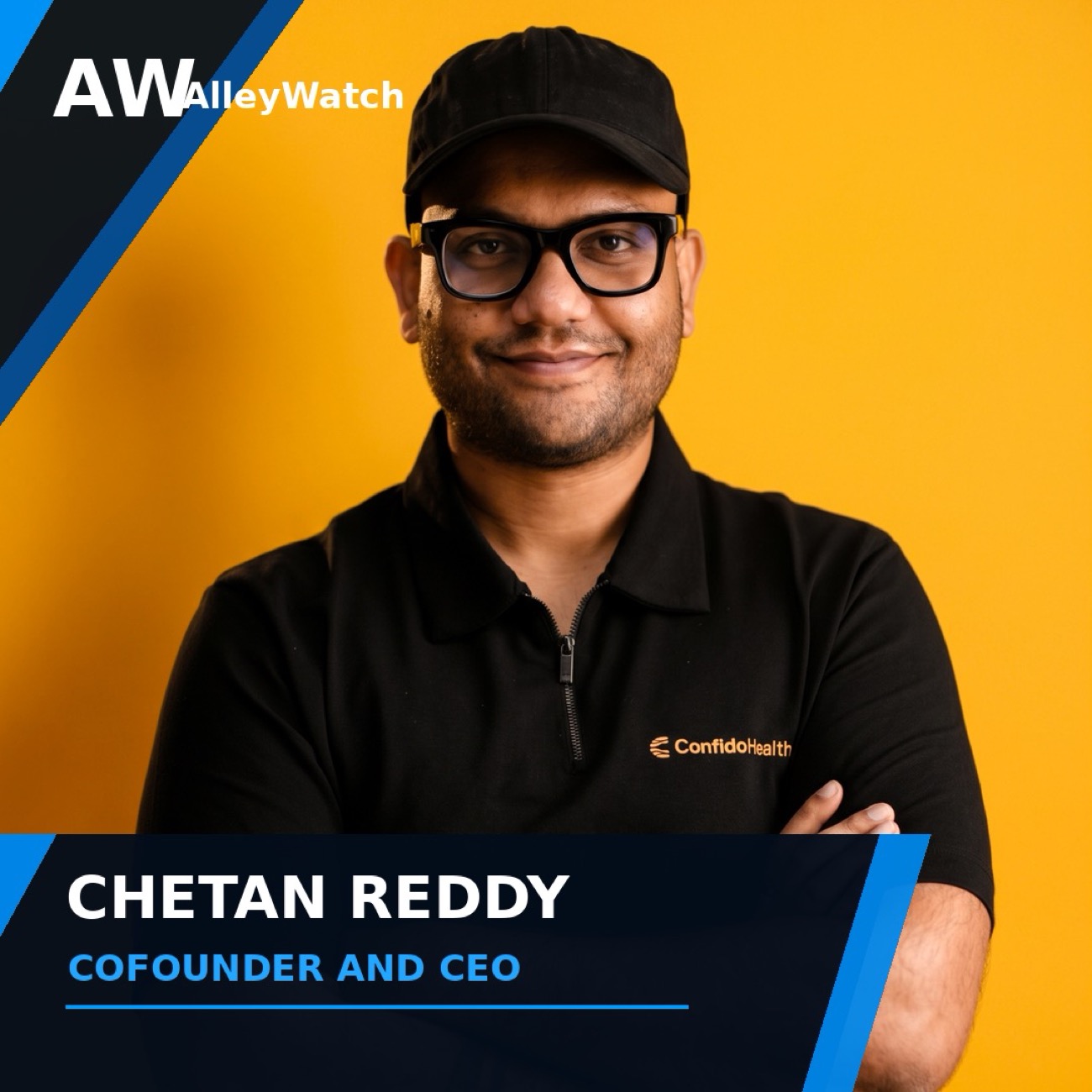
AlleyWatch sat down with Confido Health cofounder and CEO Chetan Reddy to learn more about the business, its future plans, recent funding round that brings the company’s total funding to $25.5M, and much, much more…
Who were your investors, and how much did you raise?
We closed a $12.5M Series A extension led by Z47, bringing the total Series A round to $22.5M.
Tell us about the product or service that Confido Health offers.
Confido Health is the healthcare provider AI partner for patient access and revenue cycle workflows: building the agentic operating layer powering the transition of healthcare operations from systems of record to systems of action. Where systems of record store information, Confido’s seamlessly integrated AI agents act on it, creating an operational system of action that runs a practice from end to end.
Our AI agents work across phone, text, email and fax, in more than 20 languages. They schedule and confirm appointments, verify insurance, handle prior authorizations, process faxes and referrals, manage refills, and call patients about open balances. Every completed task is written back to the practice’s EHR. We integrate with 50+ systems of record, so a practice keeps its existing tech stack and most go live in four to six weeks.
Today we work across more than 1,500 sites of care in 27 states, reaching about 3,200 providers. Roughly one in 50 U.S. patients can now reach their provider through Confido’s agents.
What inspired the start of Confido Health?
 When my wife was diagnosed with scoliosis, I saw firsthand how hard it is just to get care. It was a struggle to get calls answered, get clear instructions, and follow up after appointments. When I raised it with her doctor, he was candid: the practice simply didn’t have enough staff to give patients the support they needed. That conversation stuck with me, because it showed a problem far bigger than one office. Outpatient providers across the country are stretched thin by staffing and capacity problems.
So I went to see it for myself. Over 15 months, I visited practices across the U.S. and worked in their front offices. That time convinced me that healthcare providers need better ways to handle administrative work and help patients navigate their care.
How is Confido Health different?
Three things.
First, we complete the work instead of routing it. Our agents follow through end-to-end on workflows that connect patients, providers, payers, and pharma. Our agents carry context from one task to the next. Patient details, referral information and payer requirements captured at intake drive outreach and scheduling later. One interaction can trigger a referral, an appointment, a refill and a payment, without bouncing between tools or people. We hit 95%+ AI handle rates on critical end-to-end workflows.
Second, we go beyond the front desk. We started with voice, but we now cover the front, mid and back office, from scheduling to insurance verification, prior auth, denials and collections. We are the System of Action for healthcare operations, from phone to payments and everything in between.
Third, our distribution. We partner with private equity firms, then expand across their portfolio companies. When a PE sponsor realizes the capacity expansion and ROI we add at one owned services asset, it asks us to deploy at the others. That flywheel is a big part of why we’ve grown 15x since our last round.
What market does Confido Health target and how big is it?
We serve multi-site outpatient provider groups, independent practices and PE-backed MSOs and DSOs. Our focus specialties include ophthalmology and optometry, physical therapy, dental, and primary and community care, and we also work in nephrology, gastroenterology, urology, women’s health, along with 12 other specialties.
The market is enormous. Healthcare administration is a trillion-dollar cost center, and for decades the only way to manage it was to hire more people. Support staff compensation alone runs about 25% to 30% of a practice’s revenue. Meanwhile, ownership is consolidating fast: PE firms own about 6.5% of U.S. physician practices, and corporate entities collectively own about 30%, per the AMA. Those multi-site groups share our exact problem set: labor shortages, rising costs and fragmented systems.
What’s your business model?
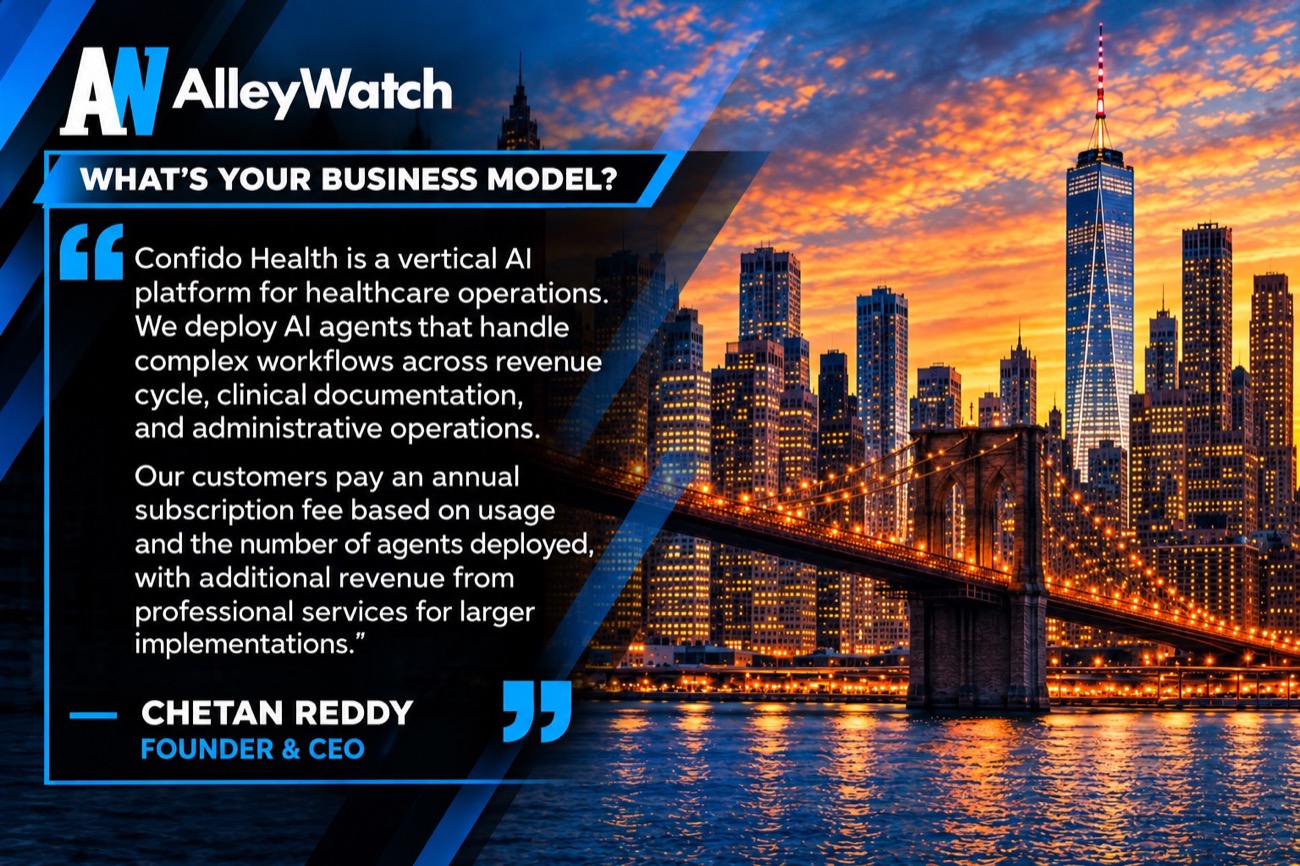
The economics are straightforward for the customer. We offer a consumption or usage-based pricing model that is time-based or task-based billing with no other fees. It’s simply “pay for the agents you use” only when AI is active across phone, text, email, website, or fax processing. There are no platform, licensing, integration, implementation, per provider or yearly fees.
Confido Health adds capacity equivalent to three to five full-time employees on average within three months, and providers project $10 million to $15 million in annual savings. Our customer Vision Innovation Partners doubled collections in its payments department after deploying Confido.
How are you preparing for a potential economic slowdown?
Adding capacity without adding headcount, matters more, not less, when budgets tighten. Practices face double-digit operating cost increases, flat reimbursement, and persistent staffing shortages. A slowdown doesn’t change any of that.
Patient demand for outpatient care is also largely non-discretionary. Phones keep ringing, claims still need to be filed, and balances still need to be collected.
What was the funding process like?
Our Series A came together in two parts. We announced a $10M round led by Blume Ventures in September 2025. Our growth after that outpaced the plan, and then we closed a $12.5M extension led by Z47, formerly Matrix Partners India bringing the Series A to $22.5M. Together Fund and Blume came back in, and Justin Saks, who has spent 14 years investing in multi-site healthcare, joined as an investor and board advisor.
The extension felt less like a pitch process and more like a continuation of conversations with people who already understood the business. Existing investors re-upping and a healthcare PE veteran joining told the market the traction was real.
What are the biggest challenges that you faced while raising capital?
There’s a lot of AI slop and vapor out there. It’s noisy. And it’s easy to get lumped together. But we are different. We’re not a Voice AI company, we’ve evolved to be much more. We complete workflows across the front, mid and back office, we write back into 50+ systems of record, and we have a distribution channel competitors can’t easily copy.
What factors about your business led your investors to write the check?
Growth and distribution: 15x since our last round, with PE-backed provider organizations emerging as the key channel. Results: 95%+ AI handle rates, three to five FTEs of added capacity within three months, and 4.55 out of 5 patient satisfaction across more than 1 million tasks. Distribution: Justin Saks put it well, describing the PE flywheel as unlike anything he’d seen in his years investing in multi-site healthcare.
Every provider runs on a different patchwork of systems, and our platform, CareOS, plus our forward-deployed engineers make deployment and integration seamless, so our agents become part of the workforce. And the ROI starts on day one.
What are the milestones you plan to achieve in the next six months?
- Expand deeper into our focus specialties: ophthalmology and optometry, physical therapy, dental, and primary and community care.
- Grow within existing PE portfolios, turning single-group deployments into platform-wide standards.
- Extend CareOS further into mid- and back-office workflows like prior authorization, denials and payer intelligence.
What advice can you offer companies in New York that do not have a fresh injection of capital in the bank?
Go sit where your customer sits. Before we had real funding, I spent 15 months in practice front offices. That taught me more than any amount of capital could have. It also earned us early customers who then later invested.
We win by delivering ROI. Investors and customers both fund proof, and capital is far easier to raise when the numbers speak for themselves.
Where do you see the company going now over the near term?
We’re building the agentic operating layer for healthcare operations. The goal is a hybrid workforce where AI agents handle the tedious, routine work across every channel and every system, and staff spend their time with patients. In the near term, that means becoming the default choice for PE-backed and multi-site provider groups, and making Confido the standard every new add-on runs on from day one.
Patients win too. Verification becomes instant, authorizations aren’t delayed, and you get the appointment slot you want.
Today, one in 50 Americans can access care through Confido. And that number is only growing.
What’s your favorite fall destination in and around the city?
Central Park, it’s cliche but it’s true. While everyone else is upstate leaf-peeping, I’m still here.
Also Storm King Art Center in the Hudson Valley. Giant sculptures, rolling hills and peak foliage, about an hour from the city.