

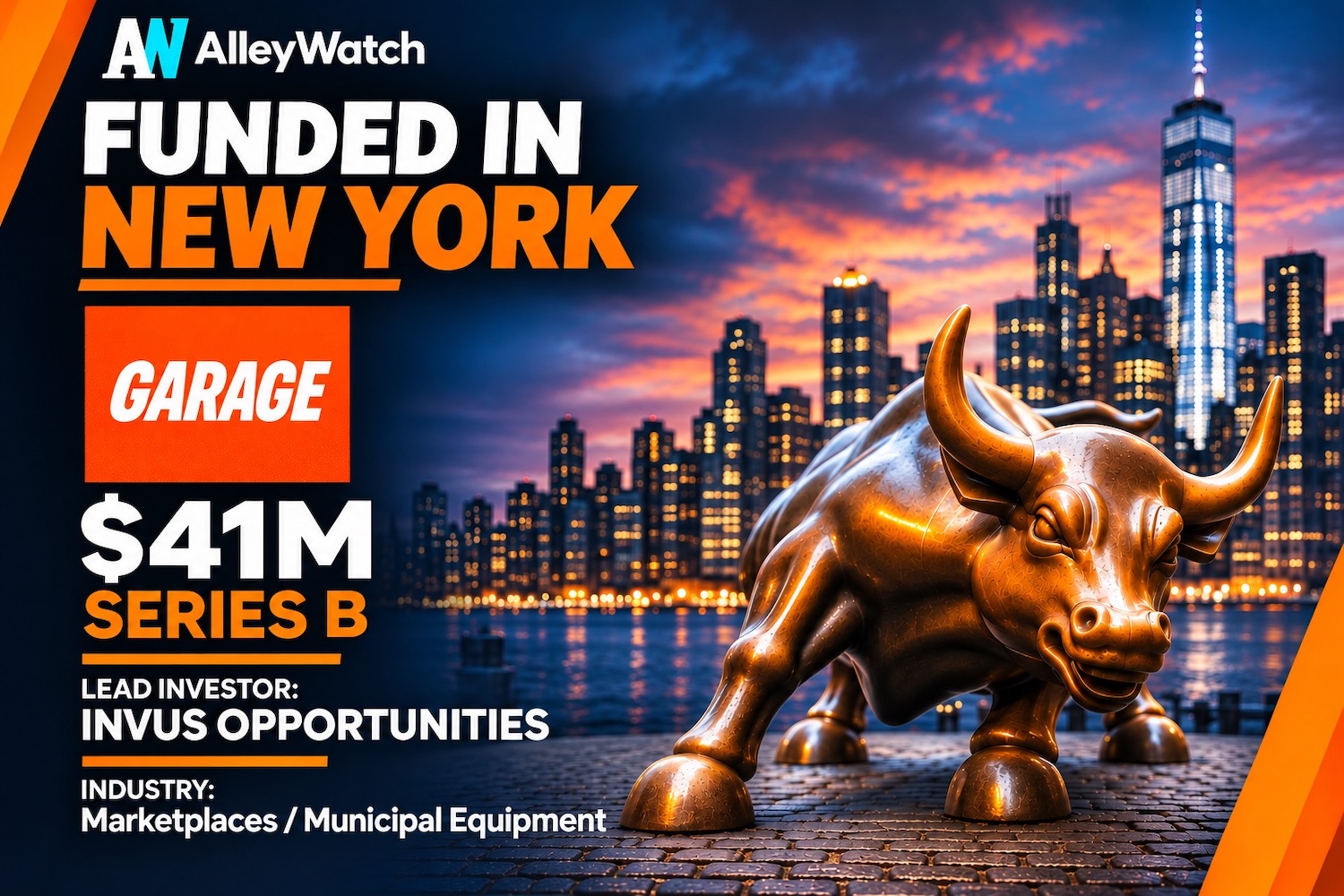
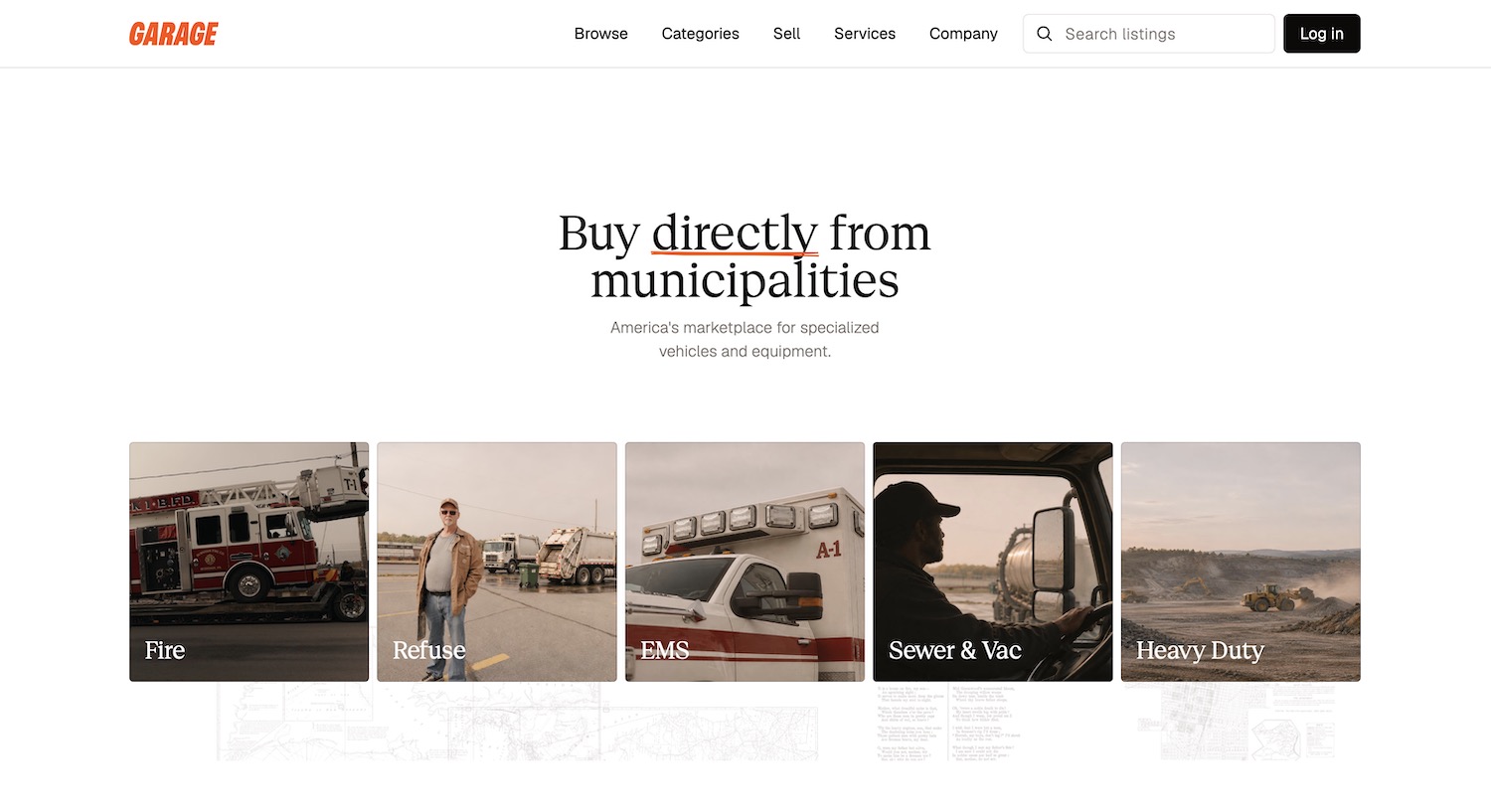
Local governments own some of the most expensive, specialized assets in the public sector, from fire engines to garbage trucks, yet the market for reselling them never left the era of paper and phone calls. When a town retires a truck, it usually turns to a regional auction, where a thin pool of nearby bidders pushes the price toward scrap value, while buyers on tight budgets cannot see inventory beyond their own region. Garage built an AI-powered marketplace that connects buyers and sellers of these heavy-duty assets across all 50 states. Its AI appraisal tool sets data-driven valuations, instant freight quoting moves 80,000-pound vehicles across state lines, and warranties and financing fit municipal budgets and procurement rules. The platform now serves more than 1,000 communities and has passed $100M in annualized platform sales, with the average transaction traveling more than 1,400 miles. Garage now applies the playbook it built for fire trucks to public works and sanitation, where the same procurement problem exists.
AlleyWatch sat down with Garage CEO and Cofounder Martin Hunt to learn more about the business, its future plans, recent funding round, and much, much more…
Who were your investors and how much did you raise?
We just raised a $41M Series B round. The round was led by Invus Opportunities, with participation from Infinity Ventures, Initialized Capital, Y Combinator, Benchstrength, eBay Ventures, and FJ Labs. This brings our total capital raised to $60M.
Tell us about the product or service that Garage offers.
Garage is an AI-powered marketplace specifically built for buying and selling America’s essential heavy-duty assets — everything from fire engines to garbage trucks. We have digitized a process that has traditionally been offline, local, and incredibly manual. Our platform features an AI appraisal tool for data-driven valuations, automated end-to-end logistics and freight quoting, comprehensive vehicle warranties, and custom-built financing designed to navigate local municipal budgets and compliance standards.
What inspired the start of Garage?
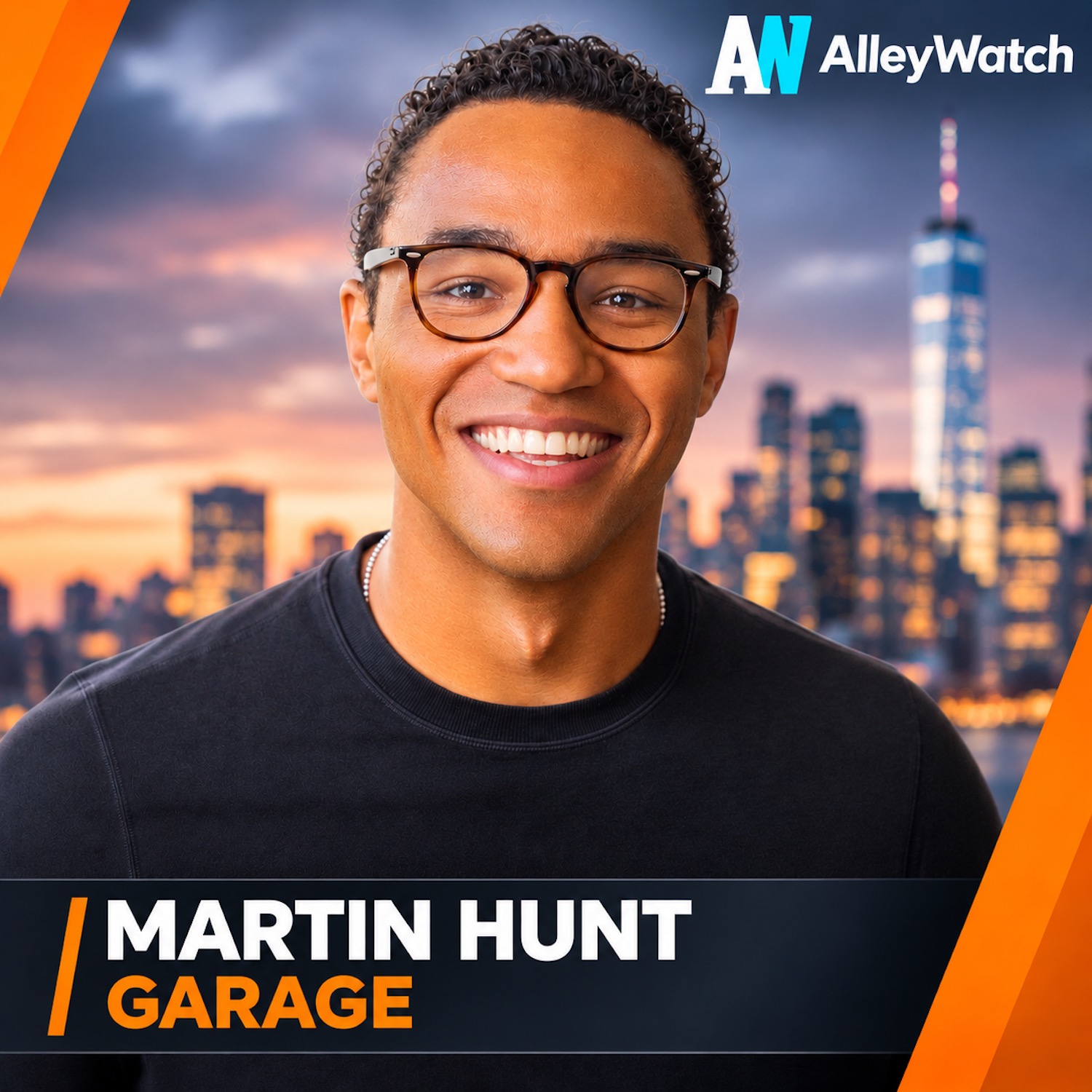 At a young age, I worked as a firefighter and EMT before working on Wall Street after college. In 2023, I received a call from a fellow firefighter who was frustrated by how difficult it was to buy and sell used equipment. Recognizing that this critical industry was still running on paper and archaic systems, I left my job and teamed up with Alaz Sengul (CTO) to launch Garage. We started by serving fire departments before broadening to municipalities and essential service businesses, helping them transact their most expensive, hard-to-move assets.
How is Garage different?
We are digitizing a massive secondary market that modern technology has completely ignored. Traditionally, municipalities had to rely on local auctions, often selling assets for scrap value, while buyers faced limited selection due to geographic constraints. Garage connects buyers and sellers across all 50 states, and makes it easy to transact expensive, hard-to-move assets from thousands of miles away. Most notably, we have automated the friction and reduced the risk: we seamlessly move 80,000-pound vehicles across state lines with instant freight quoting and automated freight coordination, and offer secure payment processing and warranties that protect buyers and sellers making high-stakes transactions.
What market does Garage target and how big is it?
We target the secondary market for heavy-duty assets, serving local governments and essential services businesses. This is a massive, $1T market that has historically been fragmented and offline.
What’s your business model?
We operate as a digital marketplace connecting buyers and sellers of specialized heavy duty assets. We facilitate the transaction from end-to-end, integrating logistics, vehicle appraisals, warranties, and financing directly into the platform. We take a fee on sales done on our platform.
How has the business changed since we last spoke after your Series A last year?
The growth has been explosive. We recently crossed $100M in annualized platform sales and are experiencing rapid year-over-year growth. We are now serving over 1,000 communities across all 50 states, with the average transaction traveling more than 1,400 miles. To date, we estimate we’ve saved municipalities over $100M by helping them capture much higher surplus recovery values and acquire high-quality used fleets at a fraction of the cost of new equipment.
What was the funding process like?
We are fortunate to have extremely supportive, high-conviction investors. The fundraising process was a great way for us to formalize partnerships with like minded partners who we’ve been able to build relationships with over time.
What are the biggest challenges that you faced while raising capital?
We were also very intentional about finding partners who shared our long-term vision. For us, raising capital wasn’t just about securing funding. It was about bringing the right people around the table who understand what we’re building and can help us get there.
What factors about your business led your investors to write the check?
Investors recognized the sheer scale of the overlooked $1T market we are transforming. We aren’t just building software; we are fundamentally rewiring how local governments and private operators across the country procure the equipment that keeps our communities running.
What are the milestones you plan to achieve in the next six months?
We plan to use this funding to grow the team and accelerate our expansion into new heavy-duty verticals like public works and sanitation.
What advice can you offer companies in New York that do not have a fresh injection of capital in the bank?
Spend time with your customers. We talk to fire departments, city government officials, and others who use our platform every day to understand their pain points and feedback.
Where do you see the company going now over the near term?
In the near term, we are focused on scaling our marketplace to ensure that every community, regardless of size, can maintain its essential services without bankrupting their town. We are taking the playbook we successfully built for fire trucks and applying it to sanitation and public works, solving the procurement problem for any asset that is expensive, specialized, and hard to move.
What’s your favorite fall destination in and around the city?
Definitely Central Park. My cofounder and I met while studying at Columbia University, and some of our favorite memories together are in Central Park.
Social Handle