

Two years ago, Matthew Capala of Alphametic published SEO Like I’m 5, which he billed as the ultimate beginner’s guide to search engine optimization. As someone who knew next to nothing about the topic, I reviewed the book and came away fairly educated. But that was 2014. What’s changed with Google since? (Let’s be real: With SEO we’re always talking about Google. Nobody’s checking up on Bing.) Thankfully Capala has prepared a great Slideshare to explain all the changes and actions you need to take.
One important thing to put in perspective is that Google changes things around a lot. Algorithms change around 600 times a year, each month most of the top 10 ranked links will change positions and each day 78 percent of results will move around. There’s only so much that’s in your control, so focus on that.
What has remained the same in the last few years is that Google is becoming less about searching for links and more about searching for information. To quote myself in my review:
One major insight in this book will make you take a second look at your Google search results. Not only has Google worked to make results less cluttered with spammy, low quality links, but Google is also now interested in providing information as quickly as possible. […] When you search for person, place or company it will bring up pictures, videos and a Google+ profile or contact information. Not only does it make sense for you to be multichannel to maximize your outreach, but it’s also how people searching will find you. It will pay to think beyond websites and the usual social media platforms.
I would amend that throughout the years, Google has been trying figure out how people search for stuff. It has now collected years of data and has “learned” how to help people out with what and how they are searching for things.
But what does this mean for brands?
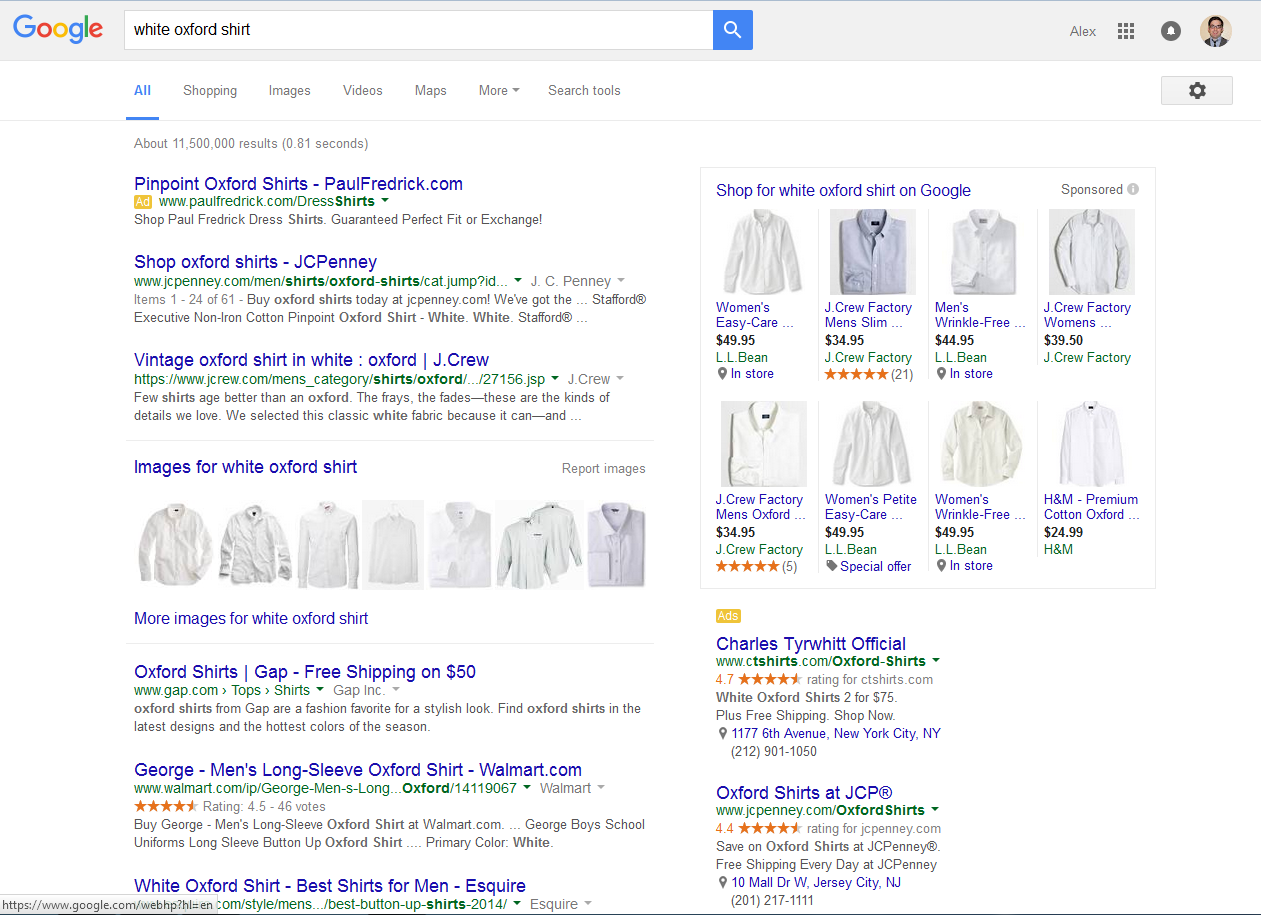
As shown above in my search for “white oxford shirt,” Google is trying to give me access to that shirt either through Google Shopping, ads or even an image search. These elements box out spaces once solely taken up by links. Links now only make up 15 percent of the search engine’s result page, the rest being maps, videos, “Knowledge Graphs,” and other things. Brands now have to “be the answer.” (This is also the title of another Slideshare that Capala recommends.)
One way is through Wikipedia, which where many people go for answers because it ranks high on the results page. However, obtaining and maintaining a Wikipedia page is not easy. People are discouraged from creating their own page(s) and the content and existence of a page can be at the whims of editors.
Another way is: get gud. What I mean by this is: to get on the front page and stay high in the rankings, you need to be doing things that are good for your business. You should be a important player with established authority and expertise in the field, you should have people talking about you, you should be linking to other people. Additionally, Your user-base should be interacting with you regularly and your website should load quickly, be secure and look good on mobile devices.
Speaking of interacting with your user-base: Google pulls from social media platforms as well. After a deal between Twitter and Google, search results will showcase tweets and tweets are indexed. Even having a community on G+ (a stripped down version of Google Plus) can be useful.
Hopefully, this brief overview will interest you in the full report, which you can sign up for free here.
Image Credit: CC by Josh MacDonald