


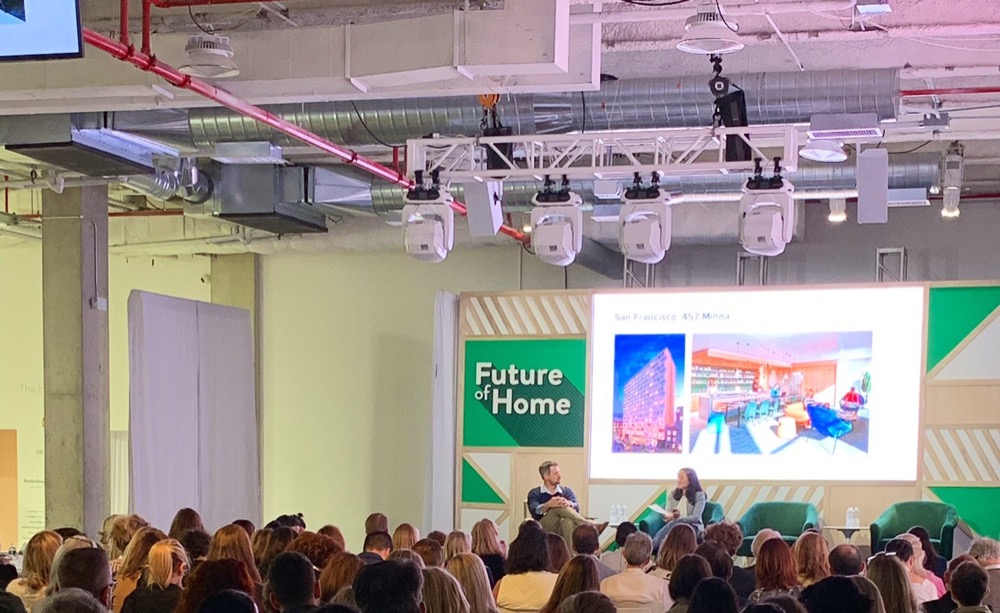
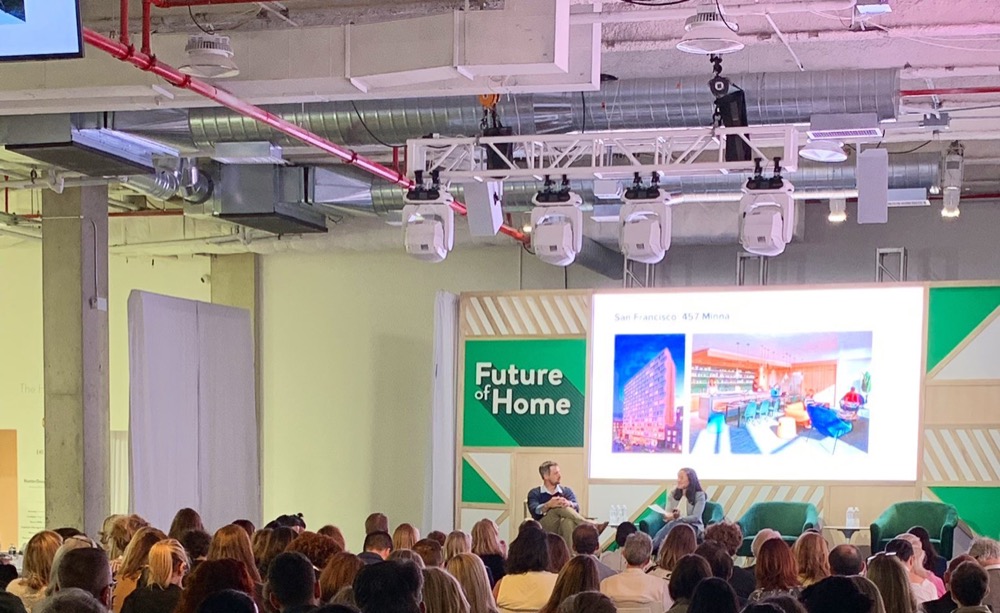
It’s hard to keep up with all the ways technology is changing various industries, especially in home and design. The Future of Home conference was a two-day event that featured in-depth conversations with top designers and industry leaders, such as Cheryl Young from Zillow and Patrick Sisson from Curbed.
Young and Sisson reflected on how technology is changing real estate as well as growing trends- like co-living.
While it may seem like co-living is a recent trend with startups like Common and WeWork’s WeLive making headlines, co-living has actually been around for approximately twenty years and most likely in a less trendy, branded version – think Craigslist roommate search.
Today it’s taking millennials longer to reach certain life milestones, like purchasing their own homes, so co-living companies have been viewed as viable alternative solutions. When discussing housing and technology trends, the default tends to be to focus on millennials; however, the United States population is growing to be skewed towards older generations.
Silver Tsunami
The silver tsunami, a term mentioned by Young and Sisson, is defined as the spread and growth of senior communities. By 2035, one-third of households will be headed by someone who is sixty-five-years or older, thus impacting how housing evolves. A prominent example of this is Related Companies partnering with Atria Senior Living in $3 billion development of upscale high rises for senior citizens. Manhattan and San Francisco will be the first sites for this project.
While developers are reacting to the U.S. demographic sheet, smart home technology is also responding.
Due to a growing trend of downsizing later in life and aging in place, smart home technology will include features and services to help facilitate this process. Young and Sisson discussed how Alexa’s simple voice commands, including ordering groceries or calling someone, is extraordinarily useful to the aging population or the smart, tech concierge Hello Alfred that provides in-house services such as unpacking groceries and putting them in the fridge and even making sure that a table has fresh flowers. However, in-house and smart home amenities are not only preferred by the aging population. More than 40% of millennials and Gen-Z’ers desire an apartment building with smart home features, and according to Bain & Company, the IoT market is projected to grow to $520B by 2021.
As homes get smarter, smaller and mid-sized cities are projected to grow. Sisson and Young named San Antonio, Memphis, and Louisville as some of the cities you look out for.