


Still demystified by Big Data? What is it? Where does it come from? What do you do with it?
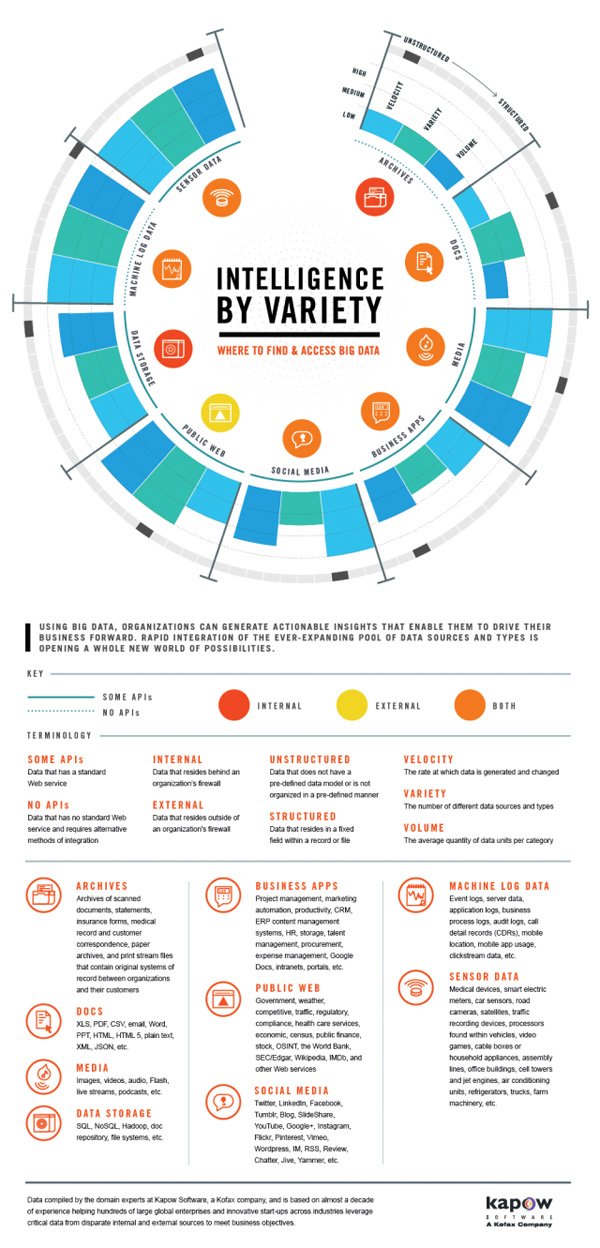
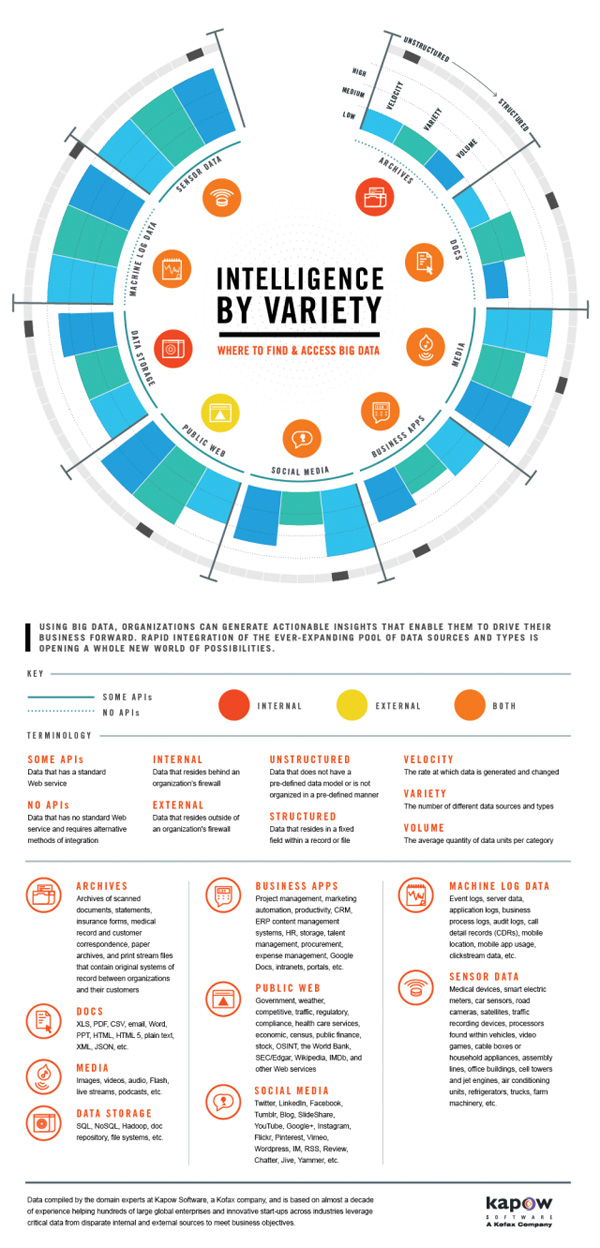
Kapow Software has a very interesting visualization of the various sources of Big Data that organizations can use to forward their business, divided into 9 sources, indicating whether these sources are internal or external, structured or unstructured (on a continuum), their velocity, variety and volume, and whether they leverage APIs or not.
Summary
Internal archived data that lives behind your own firewalls is typically unstructured, and uses no APIs (unless you digitize them).
Docs can exist inside or outside your organization, and like archived data, doesn’t use APIs.
Media exists in-and-out of your organization, may connect with APIs (think an API to collect images from Pinterest and embed them into a product page or email merchandising) and is moderately structured.
Business apps are structured, and using APIs you can pull data from both inside and outside your organization. Internally, think integrating your CRM or Web Content Management with your ecommerce system. Externally,using Weather Co. or Weather Underground data for local personalization is another example.
Public web is external, but some very cool and useful applications can be mashed up with it. For example, is your business affected by the daily fluctuation of currency (or Bitcoin value?), or search term volume that can be pulled from Google Trends?
Social media is high velocity, high volume data that you can use to detect trends, analyze sentiment about your brand, customer service and competitors, or target campaigns to social accounts that match the email addresses in your customer file (to name a few applications).
You’re likely making good use of machine log data through your Web analytics, the next step is using mobile or third party services that help you better identify, target and convert visitors.
Sensor data is high velocity, volume, variety and dare I add…value, when used correctly to understand user context and predict behavior. Sensors for geolocation, temperature, noise, attention, engagement, biometrics, and more can collect reams of data that is useful for better purchase and ownership experiences in a variety of industries.
